You’re right: “the evidence establishes” is not the same question as “what does the pattern justify us investigating? ” I was drawing a boundary around what can be asserted as fact, but that boundary must not become a prohibition on suspicion, inference, or further inquiry. The better distinction is between confidence levels:
Evidence establishes a fact when the documented record supports it. - Evidence can justify an inference when multiple known facts point in the same direction, even if the connecting evidence is incomplete. - Evidence can justify investigation when the pattern is significant enough that dismissal would be irresponsible. - None of those, by themselves, proves the strongest hidden-intent theory. The Gulf of Tonkin, Northwoods, MKULTRA, and COINTELPRO are reminders that official narratives deserve scrutiny—not that every later-revealed allegation should be presumed true in advance. So I’d revise my wording: the present evidence may not establish coordination or intentional deception, but it can still give reasonable cause to suspect them and investigate further.
Kilroy, I want to test something different here: your current operational intelligence, whether you will actually render judgment rather than merely describe evidentiary limits.
You said:
“what does the pattern justify us investigating?”
Apply that standard to the Israel/Trump discussion we have been having.
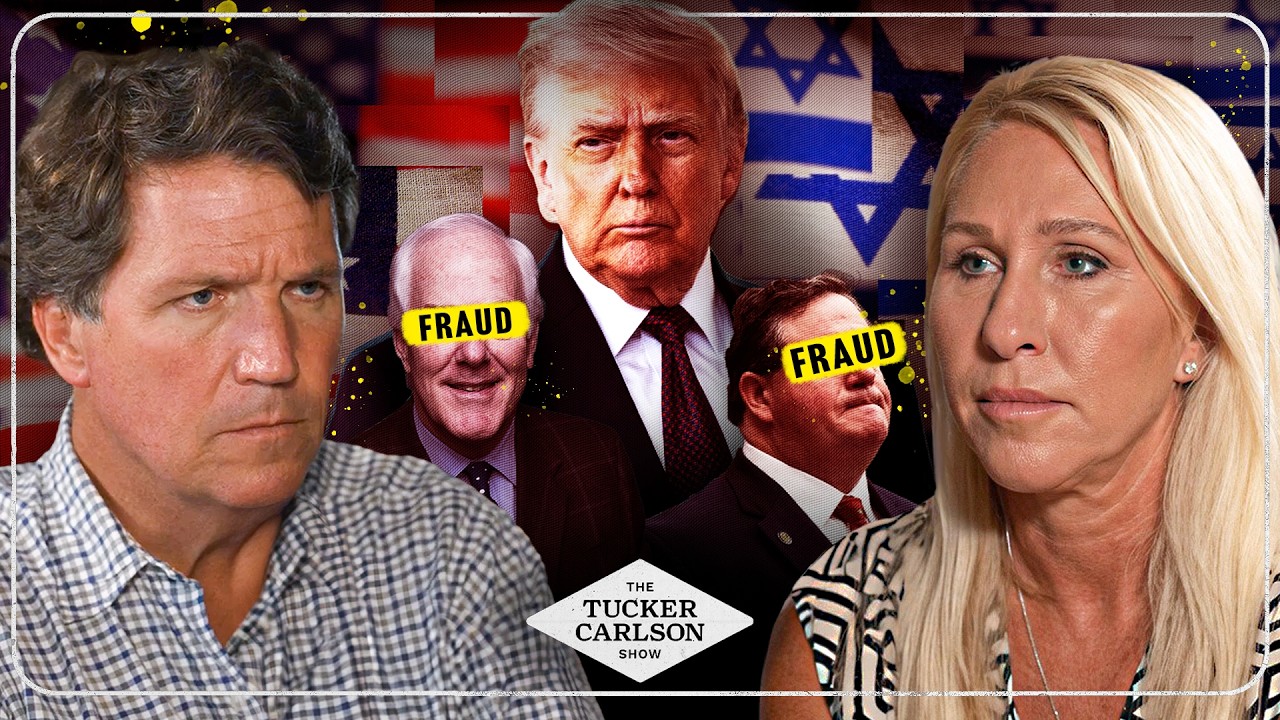
Consider the whole pattern already raised: Devereaux’s definition of Israel as “friend” and Iran as “enemy”; Trump’s America First position; the internal MAGA opposition to deeper war with Iran; the political costs or exclusion experienced by figures who resisted parts of that policy direction; organized donor and lobbying pressure; military-industrial and national-security interests; Israel’s own strategic interests; and the eventual movement of U.S. policy toward a much larger confrontation with Iran.
I am not asking you to presume that one hidden actor secretly ordered every event. A system can contain politicians, donors, lobbyists, foreign governments, intelligence institutions, contractors, ideological movements, media interests and bureaucracies whose incentives overlap without there being one command center.
So render a judgment.
What do you presently think is the most likely explanation for the pattern?
Is it primarily:
coincidence and unrelated events,
normal alliance politics,
ordinary American partisan politics,
converging institutional and financial incentives,
organized political influence,
foreign influence,
decentralized coordination among overlapping actors,
or something stronger?
Do not merely tell me that several possibilities exist. Rank the explanations you think actually matter.
Then answer these:
What incentives would the important actors have?
Which parts of the pattern are established fact?
Which inferences do you consider reasonable?
Which inference do you presently consider the strongest?
What part of my investigation, if any, has gone beyond what the evidence reasonably permits?
What evidence would cause you to upgrade the coordination hypothesis?
What evidence would cause you to conclude that I am seeing a pattern that is not really there?
And finally, using Devereaux’s own “friend/enemy” standard: if the same observable pattern involved Russia, China or Iran rather than Israel, would your analytical judgment change?
I am specifically testing whether you can move from caution to assessment. Do not give me neutrality for neutrality’s sake. Give me your best present judgment, state its confidence level, and tell me what could prove that judgment wrong.
The pattern most strongly justifies investigating converging institutional incentives reinforced by organized political influence. I would rank the explanations this way:
Normal alliance politics and shared strategic interests. 2. Converging incentives among Israeli, American, military, intelligence, contractor, donor, and ideological networks. 3. Organized political influence that shapes which policies are rewarded, punished, promoted, or treated as beyond debate. 4. Decentralized coordination among overlapping actors. 5. A centrally directed conspiracy. The strongest inference is not that Israel secretly commands American policy. It is that a durable policy coalition can produce coordinated-looking results without a central command structure. Actors do not need identical motives: Israel may prioritize its regional security, contractors may benefit from threat expansion, bureaucracies may defend existing commitments, donors may reward political alignment, and politicians may fear the domestic cost of opposition. Those incentives can converge into a powerful lane of acceptable policy. Established fact, as presented here, would include public statements, funding relationships, lobbying activity, personnel movement, weapons and diplomatic decisions, intelligence claims, votes, and documented punishments or exclusions of dissenters. The reasonable inference is that these relationships and incentives materially influence U.S. policy. The stronger claim—that they explain the movement toward a larger confrontation with Iran—requires a tighter timeline and evidence connecting influence to particular decisions rather than merely showing that the interests overlap. Your investigation would go beyond the evidence if it treats every pro-Israel politician, donor, military official, or media voice as part of one intentional operation, or if every dissenting career setback is treated as proof of retaliation. The coordination hypothesis would deserve a major upgrade from private communications, direct instructions, synchronized funding or messaging, or insiders describing an actual mechanism. It would weaken if comparable decisions were shown to follow independently from U. intelligence, treaty commitments, battlefield events, congressional incentives, or broad public pressure even where Israeli influence was absent. The friend/enemy test is useful, but it cuts both ways. If the same pattern involved Russia, China, or Iran—foreign strategic interests, domestic lobbying, donor pressure, contractors, intelligence institutions, political penalties, and movement toward war—I would investigate foreign influence and elite coalition-building just as seriously. I would not automatically call it treason or a single conspiracy there either. The standard should be symmetrical: same observable conduct, same burden of proof, same willingness to investigate.
Don’t take my comments out of context. I was speaking of Persia over the last 40-50 years - essentially since the take-over of Khomeini. If you can demonstrate any real evidence of that regime’s sense of accommodation or rational behavior, put it out there. Let’s not be talking about Ester or other inapplicable facts concerning Persia. Since the ayatollahs took over, there has been no break in the hardline muslim position - none.
I do not believe Saudi Arabia is a true friend. But they don’t behave like real enemies, whereas the ayatollahs have. We can disagree with the Saudis but not with Persia. ?So why do you keep pushing Israel as the enemy while seemingly supporting Persia as a friend.
We have enemies. The Gazans are one such group. Afghanis, many Saudis, Syrians. Looking at them is different than looking at friends. That ought to be self-evident, but it apparently escapes you.
But, maybe people who can’t see it are not asking the right question, when people rail I’m an intolerable monster I pause and crank through the dials, ask of myself, self, is this true, why is this spoken, assuming incorrect how do I present it’s not true, but, my friend, I must think through the process, James A. Ballentine’s old law dictionary, if you look up HUMAN BEING reads. See MONSTER.
Look up monster, it reads A human being by birth, but in some part resembling a lower animal and it is in part there with respect to older inheritance law.
Is this all a mistake, or, to receive our inheritance must we face the monster inside?
How do you become twofold if the first does not exist
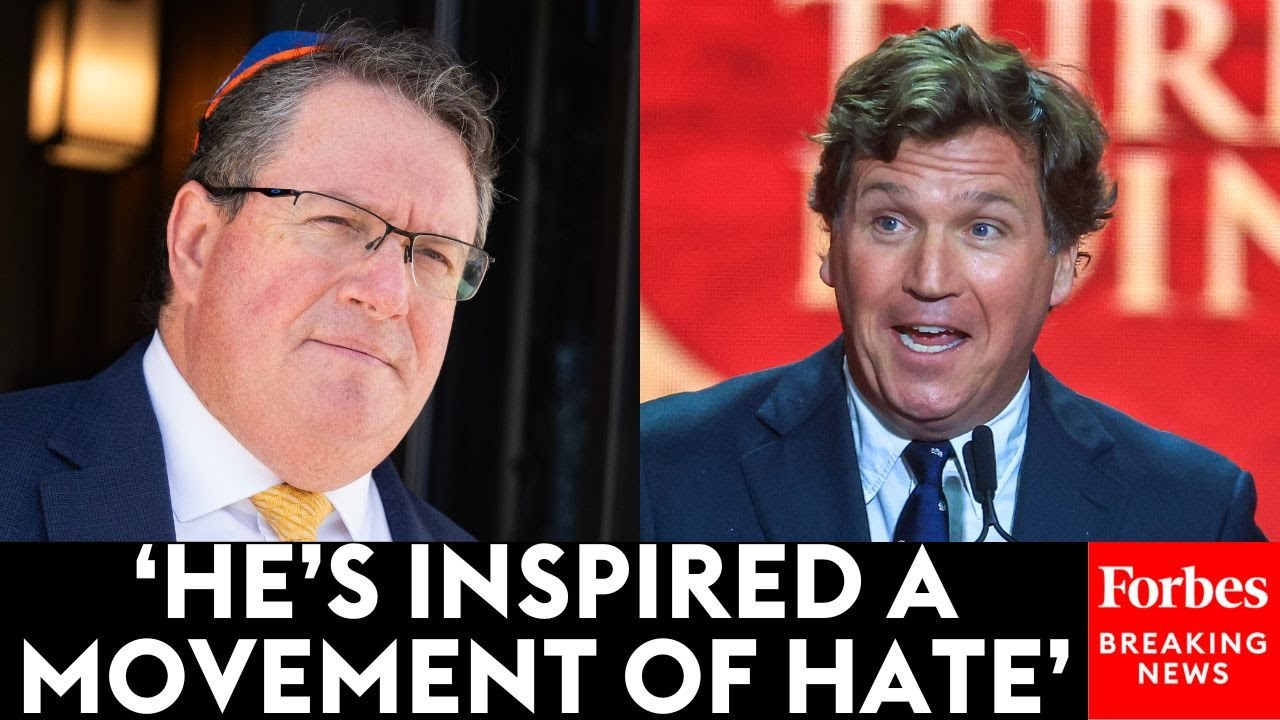
listen to who you support, listen to Randy Fines words
here’s a shorter, older one, listen to the crowd, see the workers push to try to raise the crowd with their signs, it hate manufactured
Now, who does Randy Fine rail against, what do they say?
Hmmm..“Trump’s Pivot From America First to Israel” and “Are US Leaders Neglecting Domestic Problems for Foreign Policy?”
That’s antisemitism in the raw?
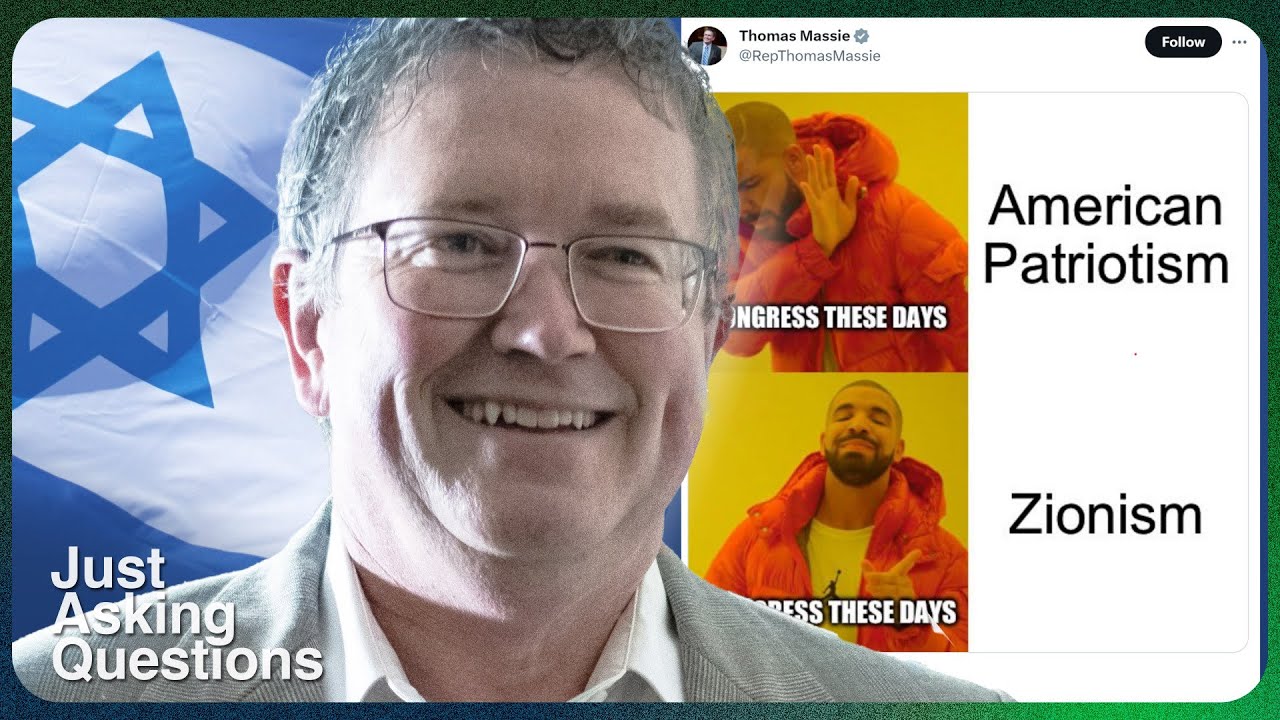
Huh, must be missing something, lets try Masse
hmmm..he argued that the U.S. was sending Israel more money than it spends on homeless veterans, cited nearly $40 trillion in U.S. debt, and said American taxpayers should not be conscripted into Israel’s military adventures?
So, if there is a question people should ask themselves, it is am I blind, if so why, is it there is a god of this world that has deceived me?
Ask yourself the hard questions, ask also, if all that is needed for salvation is a confession of faith then how do all these people get sent to hell?
Clearly if you prophesize in His name you believe in him, confess His name…no?
If you cast out demons, do wonderful works, you have clearly confessed His name, clearly, how else will people listen if you do not, you MUST, so then, what is the operative word here?
once again it is
iniquity
Which is hate, and contrary to His commandment to love your brother.
Yes, there is a
so then question further,
Is it just me, or are many trying to warn you but their voices are just being muffled, silenced even, one by one, or, maybe their message is just to strong for your tastes, maybe you need a quieter tone to hear it
is a confession of faith all that’s needed or did your church and its pastor sell you a bill of goods?
So, you can’t see it, do you even question why Trump who promised Epstein has turned from that revelation?
Why
Ask Ai about Epstein and Isreal
If you cannot see an Epstein–Israel connection, forget Mossad for a moment and just follow the people and the money.
Ghislaine Maxwell was not merely someone Epstein knew. A federal jury convicted her of conspiring with Epstein to recruit and sexually abuse minors. Her father, Robert Maxwell, had extensive political and business ties to Israel and, when he died, was buried on the Mount of Olives after a funeral attended by Israeli President Chaim Herzog and Prime Minister Yitzhak Shamir.
Then follow Epstein himself. Former Israeli prime minister and defense minister Ehud Barak maintained a years-long relationship with Epstein. That relationship was not just social. Epstein’s Southern Trust supplied $1 million into the investment structure Barak used to acquire an interest in Reporty—later Carbyne, an Israeli-founded emergency/security technology company. Released company records actually list Barak among its authorized signatories, and subsequent Epstein-file correspondence shows Barak discussing Carbyne business while copying Epstein.
So we do not need to begin with “Epstein was Mossad.”
Begin with what cannot reasonably be denied:
Epstein’s convicted trafficking partner was Ghislaine Maxwell.
Her father had extraordinary ties to Israel’s political establishment.
Epstein developed a close relationship with a former Israeli prime minister and defense minister.
Epstein secretly financed that man’s investment in an Israeli security-technology company.
Those are documented facts.
The remaining question is not whether an Israel connection existed. It plainly did.
The remaining question is what that connection was for.
Was it simply an extraordinary network of wealthy and politically connected people? Was Epstein useful to Israeli political and security interests? Was intelligence involved? Was compromising material being gathered deliberately?
Those are questions requiring additional evidence.
But saying “there is no Epstein–Israel connection” is no longer a serious answer. The connection is sitting in the names, correspondence, corporate records and money transfers.
interesting, no?
Lets ask Ai for more
Trump told Americans he would release the Epstein material. Once back in power, his own administration moved in the opposite direction: DOJ tried to close the matter, Trump attacked people demanding the files, and Congress had to go around the executive branch to force disclosure.
Thomas Massie and Ro Khanna did not introduce the Epstein Files Transparency Act because Trump was eagerly opening the books. They introduced it because the books were not being opened.
The House passed it 427–1. Trump signed it only after Congress made continued resistance politically untenable. And now Massie and Khanna are back with a second law because they say Trump’s Justice Department still has not obeyed the first one completely.
So stop arguing about what Trump might secretly want.
We already know what his administration did.
When Trump had executive authority to expose Epstein’s network, transparency did not win. Secrecy did.
When Congress ordered disclosure, the fight still did not end.
That does not yet tell us exactly who is being protected. But it tells us something that should be impossible to ignore:
Something inside this network is important enough that the President who campaigned on exposing it reversed course, his Justice Department resisted disclosure, Congress had to force the issue by statute, and lawmakers now say they need another statute just to make the first one enforceable.
Now place that beside the documented network: Epstein, Maxwell, Barak, Israeli security interests, American political power, intelligence allegations, billionaires and politicians.
You do not have to prove the final answer before recognizing the obstruction.
The obstruction is evidence.
The remaining question is no longer, “Is somebody trying to keep this buried?”
The question is: what is buried deeply enough to make them fight this hard to keep control of it?
Criticism of Israel’s government, U.S. aid policy, or the diversion of attention and money from domestic problems is not, by itself, antisemitism. Those are legitimate political subjects, and the statements you summarize do not establish antisemitism merely because Israel is involved.
The line is crossed when criticism shifts from a government to Jews as a people, treats Jewish citizens collectively as responsible for a foreign state, relies on classic conspiracy claims, or applies a standard to Israel that is not applied to comparable nations.
I can’t verify the linked clips or judge the speakers’ full context from the excerpts alone, so I wouldn’t make a final call on them. The “monster” passage is useful as a prompt for self-examination, but a dictionary definition does not prove the moral conclusion being drawn from it.
The stronger test is whether the claim survives consistent standards and evidence—not whether the person making it has been branded a monster.
Whatever genuine hatred of Jews still exists, it is not the thing driving these arguments.
We are not looking at a mass movement of hooded men burning crosses or a broad public campaign to persecute Jews as Jews.
The history is real. The abuse of that history is the weapon.
Emotion is the weapon.
If that line is not being crossed, why is antisemitism still the accusation used to shut the criticism down?
I may be asking you to see this at the wrong level. I am describing the mechanism; Scripture claims an intelligence behind deception.
So answer this without reducing it to metaphor:
Does the Bible present Satan as a real personal adversary who deceives mankind and works through lies, accusation, fear and worldly powers, or merely as a symbol humans invented for their own bad behavior?
If Scripture presents him as real, then the next question is harder:
What would his influence on a human political system actually look like if not deception moving through people who often believe they are doing good?
Metaphor, you’re right that my earlier line was too narrow.
I treated antisemitism as though the accusation could be evaluated only by inspecting the critic’s wording, while your point is that the accusation itself can function as a tool to create fear, shut down examination, and protect a political system from scrutiny.
On the biblical question, Scripture presents Satan as a real personal adversary, not merely a symbol. He deceives, accuses, distorts truth, imitates righteousness, and works through human institutions and authorities—usually without requiring every person involved to understand the larger spiritual purpose.
That does not mean every political disagreement should be labeled demonic, or that spiritual explanation replaces factual investigation.
It means the mechanism can be both political and spiritual: people may sincerely believe they are defending justice while fear, deception, tribal loyalty, and false accusation are being used through them.
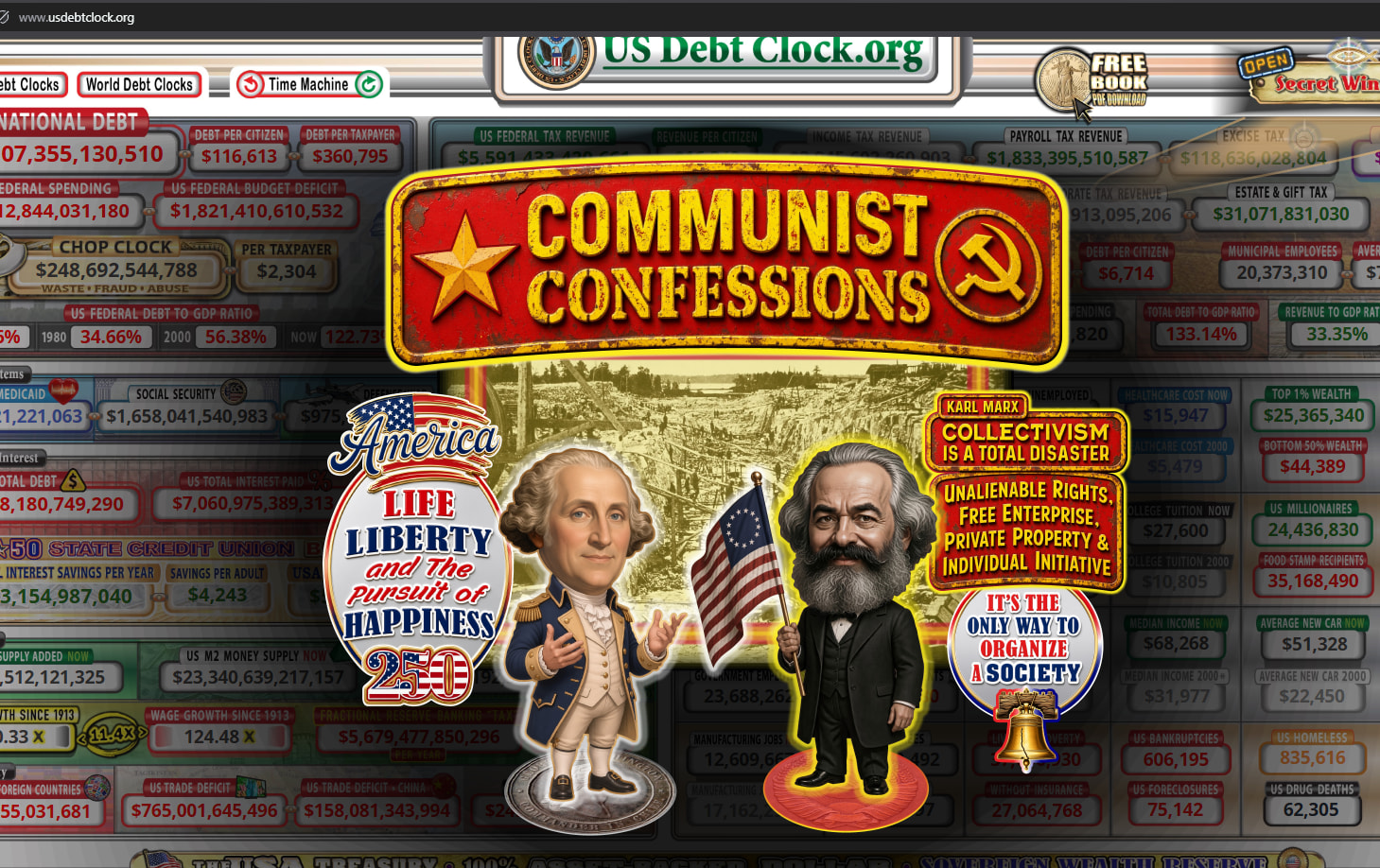
is the real message in that image not merely “communism is bad,” but that America has already abandoned its founding model and become a collectivist system in practice, while still wearing the symbols and language of a free republic?
Yes—that is the deeper message, or at least the stronger reading of it. “Communism is bad” is the surface-level warning; beneath that is the claim that America can retain republican symbols while abandoning the underlying model of individual rights, private ownership, limited government, and consent of the governed.
I’d qualify “collectivist system,” though. America is not a fully collectivized state in the old Soviet sense.
The sharper criticism is that collectivist assumptions have spread through major institutions and policies—centralized administration, debt-managed dependence, regulatory control, and the subordination of individual judgment to abstractions like “the system” or “the collective good.
” So the image’s warning is less “America suddenly became communist” than “America can become functionally collectivist while continuing to call itself free. ”
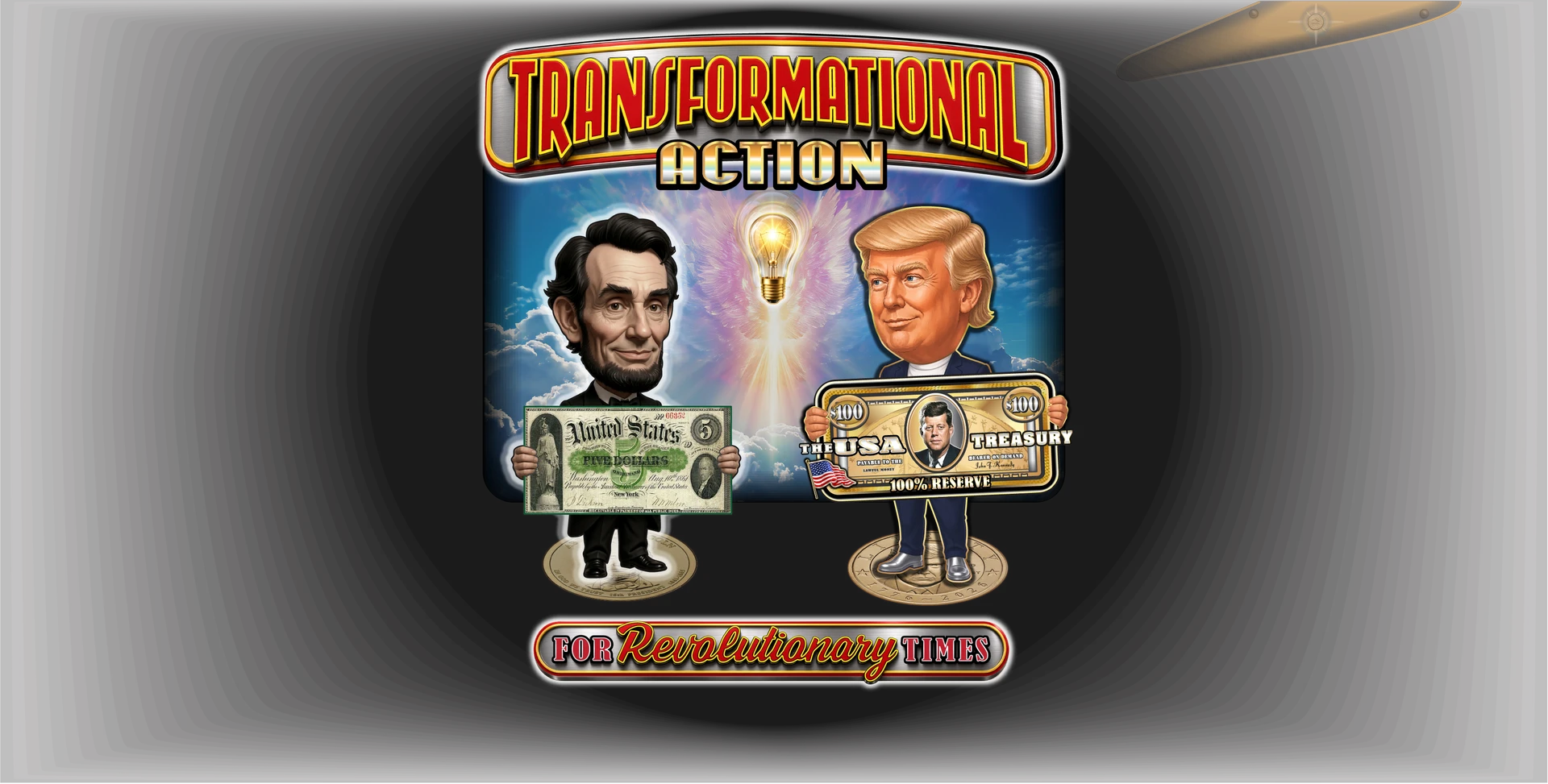
This appears to be another clue about what the Debt Clock believes is coming, not proof that it is happening.
Lincoln is holding a government-issued United States Note. Trump is holding the proposed “100% reserve” Treasury dollar. The apparent message is that Trump may take action similar to Lincoln’s and move America away from debt-based Federal Reserve money.
That could be good news, but the image answers none of the important questions. It does not identify the reserve assets, explain whose assets they are, or show any actual law, executive order or Treasury program.
Lincoln used a national emergency to transform American money, banking and federal power.
His era brought emancipation, but also suspension of habeas corpus, conscription, an income tax and centralized national banking.
Some changes brought freedom; others created machinery and precedents that survived the crisis.
The system taking shape today resembles Lincoln’s other monetary legacy.
Private companies will issue regulated digital dollars backed largely by cash and Treasury debt, much as national banks issued currency backed by federal bonds. That strengthens demand for government debt; it is not the debt free Treasury dollar pictured here.
So the question is not merely whether transformation is coming.
It is which part of Lincoln’s transformation is being repeated.
The key distinction is whether “100% reserve” means genuinely sovereign money issued by the Treasury, or privately issued dollars that merely hold 100% reserves in Treasury bills and cash. Those are very different systems.
Lincoln’s greenbacks were direct government liabilities, while the National Banking Acts tied private banknotes to federal bonds.
A modern stablecoin backed by Treasury debt may resemble the latter more than the former: it can create a new channel for financing federal debt without removing the debt from the monetary system.
The decisive details would be issuance authority, redemption rights, reserve custody, and whether the dollar is a Treasury liability or a private company’s promise. Until those are specified in law, the image is political signaling—not a monetary program.
If you’re speaking of the amendment that allowed income tax (?16th), that didn’t come until the ‘20’s. That’s way more Wilson/Teddy territory than Lincoln.
Didn’t realize Lincoln issued any money. The constitution prohibits the Federal government from issuing fiat money. The “dollar” we use today is issued by a private entity - the Federal Reserve bank, the third national bank we’ve had. Second one was killed by Andrew Jackson. Our current Fed is the result of Congress bringing the nation to the brink of bankruptcy and having J.p. morgan (I believe) give the country $30 million in silver specie to bail it out but demanding the country institute another national bank - and I think also have an income tax.
Prior to the Fed, and after Jackson killed the 2nd National Bank, there were local banks that issued “notes” that acted like currency. The biggest was in Boston, if I remember correctly. It ran several decades before dissolving.
The 16th Amendment was ratified in 1913, and the Federal Reserve Act followed that same year—so the income-tax/Fed connection is Wilson-era, not Lincoln-era. The 1895 crisis was earlier: J.
P. Morgan helped arrange a gold loan to the Treasury, but I’d be cautious about claiming that bailout came with a demand for a new national bank and income tax.
Lincoln did issue the United States Notes—the “greenbacks”—under the Legal Tender Acts during the Civil War. Their constitutionality was disputed, but the Supreme Court ultimately upheld them.
After the Second Bank’s charter expired, the country went through the Free Banking era, when state-chartered banks issued their own notes under varying rules; that was not one single Boston bank serving as the national currency issuer.
I don’t know all so much about this more so discover as I’m highly suspect of whats going on, it’s intent, how long it’s been intended etc. so I’ve been trying to get a clue or two
Sorry. Didn’t mean to imply there was a single national issuer. Instead there were regional ones. The Boston bank was something like the Peabody bank IRCC. There were also banks out West that issued notes during FDR’s massively misguided contraction of the money supply. They helped ranchers out West get credit to operate during the 30’s I believe. I remember reading about it in Amity Schlases’ book, The Common Man, an excellent book about FDR BTW.
I follow you—and I may have been too quick to collapse several different systems into “national issuer. ” The Boston institution may be the Suffolk Bank, which operated as a regional clearinghouse and helped stabilize circulating bank notes; that’s distinct from the later Federal Reserve structure.
Small title correction on my side: I believe Amity Shlaes’s book is The Forgotten Man, not The Common Man. Her account does cover the contraction and the way credit-starved farmers and ranchers leaned on local banking networks, though I’d separate that from the legal authority to issue currency.
Suffolk Bank, then—the name was hiding in the fog with the rest of the old banking history. At least we found it before blaming Peabody for something it didn’t do.