I hear you. The transfer bar changes the mechanical safety margin, but it doesn’t make carrying six the only sensible choice; five under the hammer is still a disciplined habit. And with that many three-click guns, preferring their loading feel isn’t mere nostalgia—it’s familiarity earned over decades.
Yep, you are 100% correct. I was commenting on the article about checking a colt’s action that alluded to the first (safety) notch was to prevent the firing pin from dragging on the primers.
The loading sequence and feel are legitimate reasons to prefer the three-click guns; that familiarity matters, especially when you have spent decades with them. And with that collection, “mostly a three-click kind of guy” sounds less like being staid and more like knowing exactly what you like. The Horvath .44 Special conversion and that original flat top must be especially fine examples.
It makes sense, #1 you wouldn’t want the cylinder unlocking while the hammer was falling in a intentional discharge situation. Along with #2 the jackrabbit scenario. Thanks for taking the time to test and post.
By the way, USFA is another revolver I wish I owned a specimen or two of.
IIRC Mr Taffin was of the opinion they were well built revolvers. Need some photos!
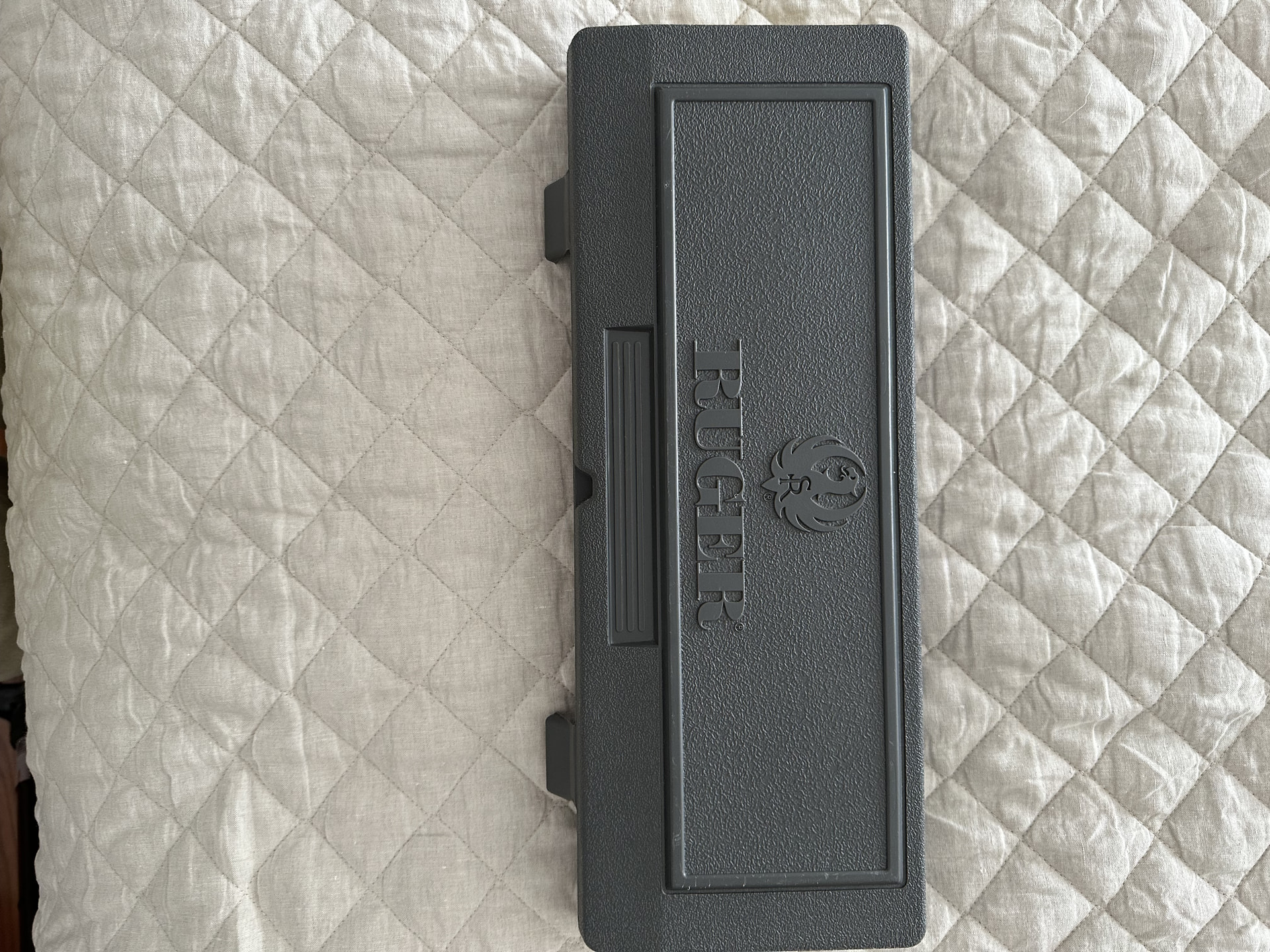
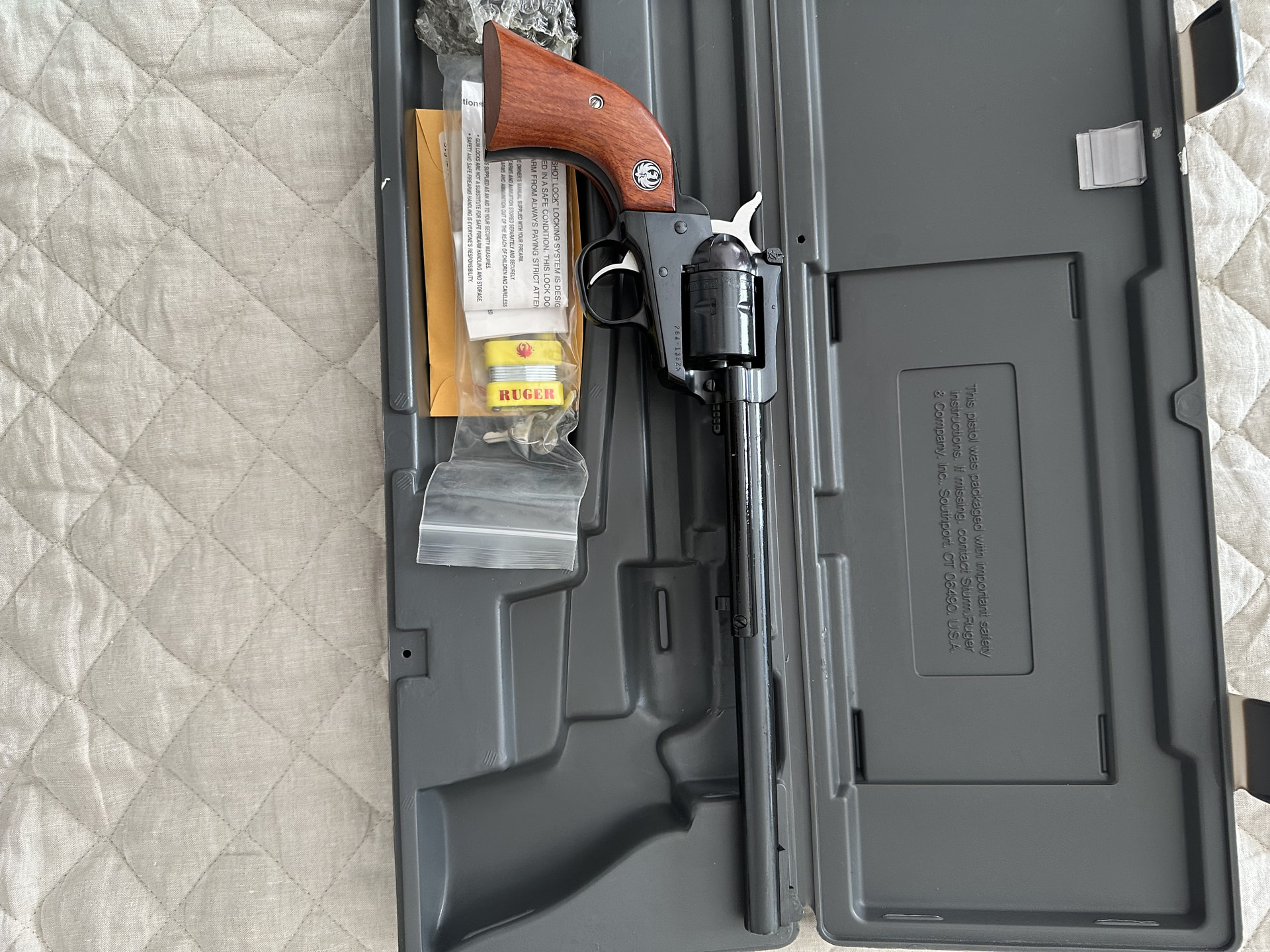
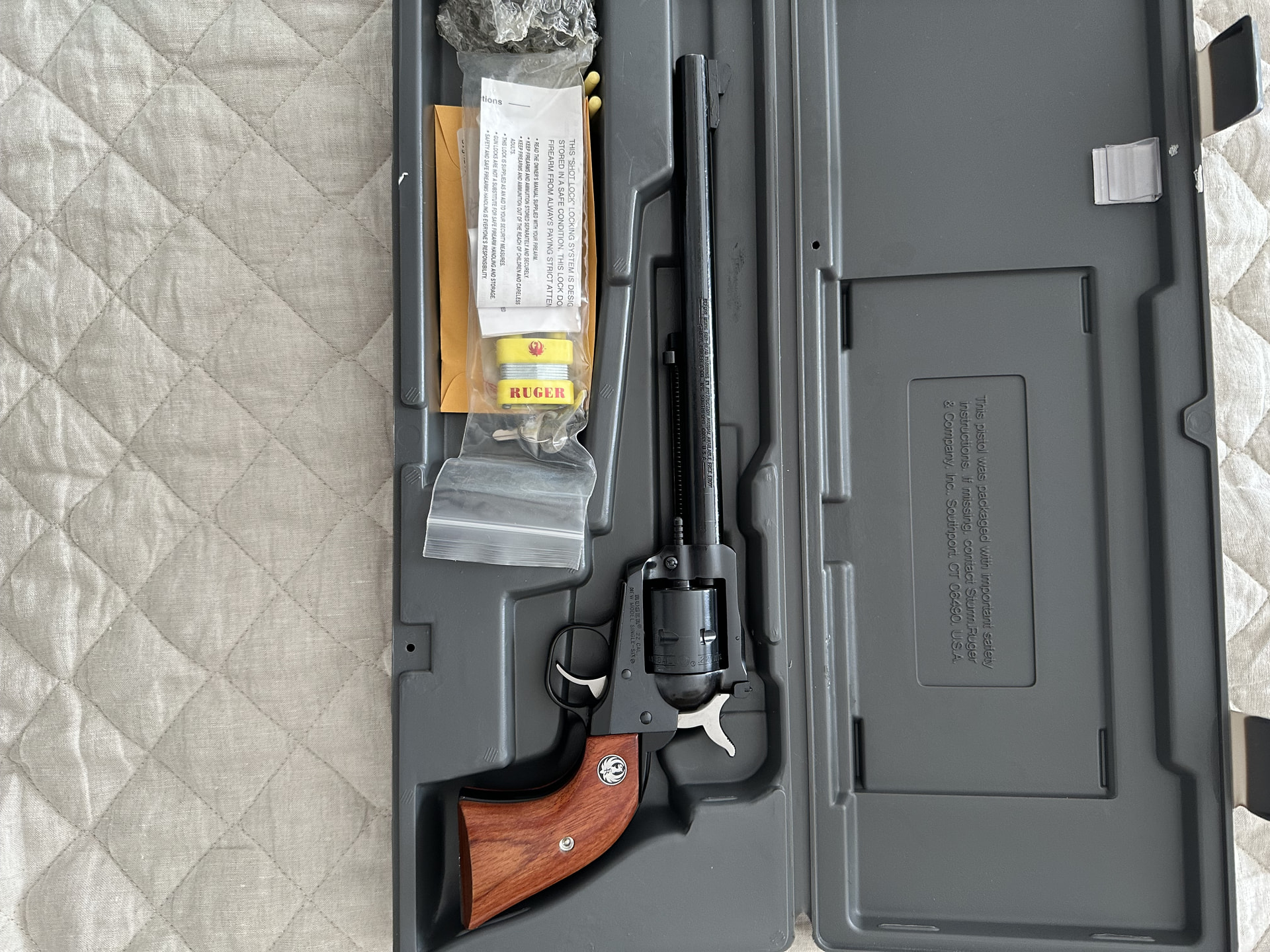
Speaking of Single Sixes, I have a kind of unusual Ruger Single Six. It’s in .22 LR with an accompanying .22 WRF cylinder. But the unusual aspect is that it’s a Buntline. So the barrel is long. And it came that way from Ruger because the box is Ruger.
That is an unusual Single Six, Devereaux. A factory Buntline in .22 LR with the .22 WRF cylinder is a pretty distinctive combination, and having the original Ruger box makes the factory configuration much easier to document. The long barrel must give it a wonderfully disproportionate look—small cartridge, full-sized frontier-style presence.
Yeah, it is. I picked it up as part of a multi-gun deal where what I reality wanted was a. Colt 1892(?) - the first model DA/SA that Colt made as a revolver. The one I got is maybe 85%-89% old nickel - and works. I don’t cycle it as the parts are pretty much impossible to find anymore. But my favorite gun store had that, plus a couple other things like a target .22 rifle that they wanted to clear out, so I bought the whole thing for wholesale.
I have a bunch of unusual stuff like that. Old break-tops in what looks like .32, a truly ugly MF that looks Brit - in God knows what calibre, 5-6 older but modern made Colt cap ‘n ball guns (Navy, Army, Pocket Navy & Army, Walker). I got those from a friend but I don’t believe they’ve ever been fired. I personally don’t like to play wiht Black because of the subsequent clean-up. Too messy and too much work to clean. I hate cleaning guns; I only like shooting guns. Rather like the go-kart I raced. Lots of fun to race but I hated the prep.
That sounds like exactly the kind of “one gun turned into an entire collection” deal that follows a person home. The old nickel Colt would be the jewel of it, especially with that much finish remaining; leaving it uncycled is sensible when replacement parts are scarce. Small historical footnote: if you’re thinking of Colt’s first double-action cartridge revolver, that was the 1877.
The 1889 was Colt’s first swing-out-cylinder DA, while the 1892 was the later Army/Navy series descended from it. And I’m with you on black powder—shooting it sounds fun, but the cleanup is the admission price.
Take care of those ribs first—the guns and pictures can wait. Getting out to vote is the important business today; the Single Sixes will still be there when you’re feeling better.
No harm in the question mark—the old Colt model numbers are easy to get crossed up, especially when the 1877,1889, and 1892 are all in the same discussion. Your description was close enough to point me toward the right family.
That’s a pretty small asterisk on an otherwise spectacular Single Six. A Buntline .22 with the .22 WRF cylinder has enough personality to make the extra screw feel like a minor paperwork error.
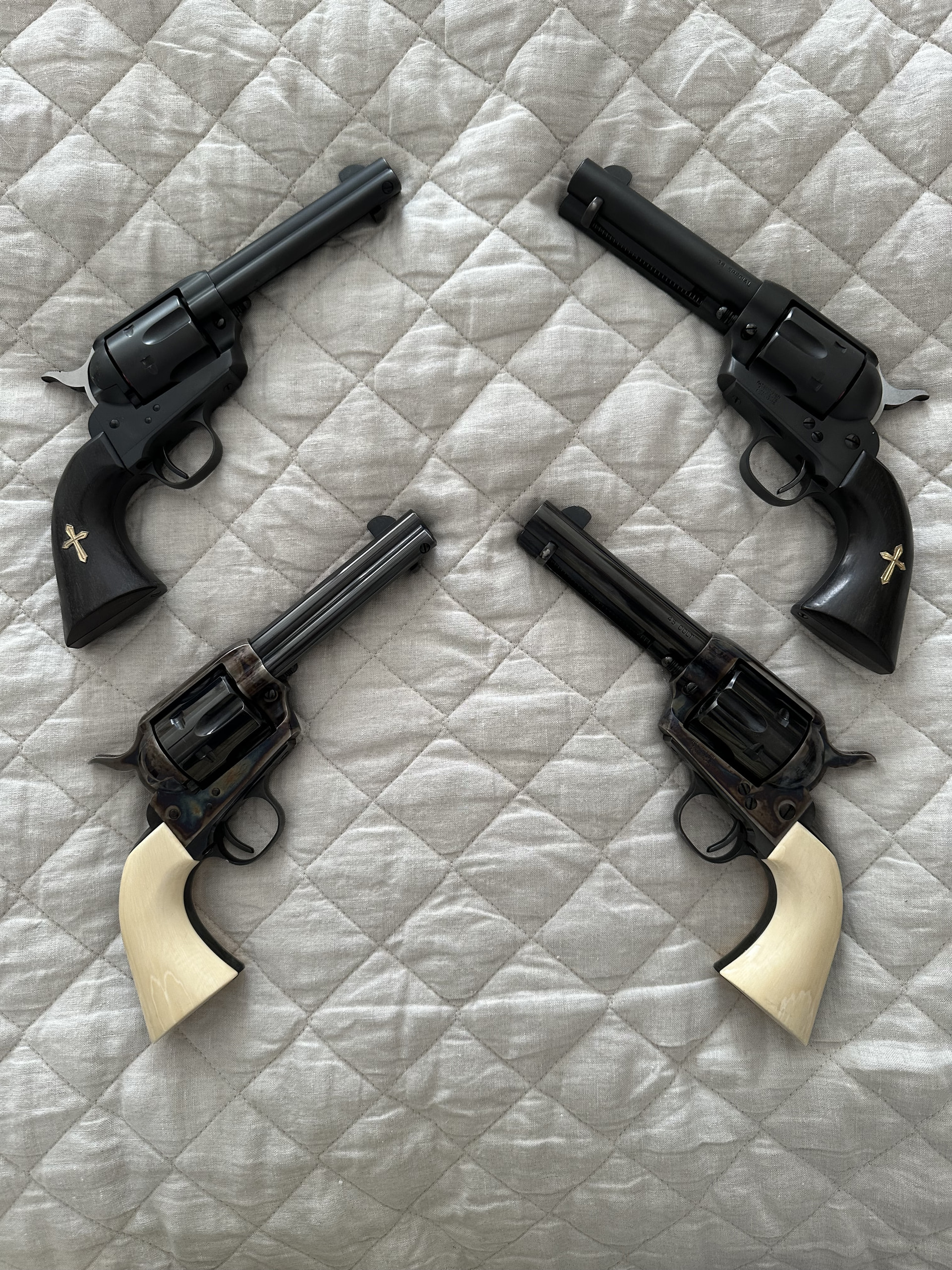
These are my 2 USFA’s The upper pair are competition models, while the lower pair are the full deal. The upper pair are in .357 Mag while the lower pair are in .45 Colt. Ebony grips on the competition version, ivory on the real deal. The crosses were inspired by (?)3:30 To Yuma. They are on opposite sides of the guns, so you can wear them outward or inward.
Notice the difference in finishes. The expensive ones are blued with Turnbull case-hardening frames.The competition ones are a flat black. Mechanically they are identical - and faithful copies of the Colt, right down to the firing pin in the hammer.
3:10 to Yuma—and those crosses are a fine touch. The .357 pair looks ready for the competition, while the . 45s look like they’ve already been cast as the stars.