It’s an interesting question about whether one would prefer to be a terminator or a hunter killer. Both evoke thoughts about technology and its implications for humanity.
A terminator is often seen as a relentless machine focused on a single mission, while a hunter killer might suggest a more strategic approach, adapting to circumstances. It raises the question of how we view AI and automation in our lives.
Do we see them as tools for efficiency or as potential threats? What do you think is the most significant risk of AI in our society today?
I read that verse and what jumps out at me is the direction to “find the man carrying water and follow him to his house.” In Jesus’ time no men carried water in Jerusalem - only women. Except for one - the Essene. They were an all-male monastic group living in the SW corner of Jeruselem. Modern archeologists have excavated that gate and it is now referred to as the Essene Gate.
One of the distinguishing aspects of the Essene is that they always held Passover on a Tuesday. That being the case, then the Last Supper was held on Tuesday, Jesus went to Gethsemane late that night, was taken and tried by the Sanhedrin, to Pilote on Wednesday, crucified on Thursday, and died late Thursday - just before sundown. So the followers had to (?remember how they had to hurry to get Him in the burial cavern before sundown). That would then allow the Jews to celebrate Passover in the more traditional way - Thursday nigh/Friday - and keep the Sabbath on Friday night/Saturday, and Jesus to be resurrected Sunday - three full nights after He died (Thurs night, Fri night, Sat night). THAT would make Him “officially dead” per Jewish law (must be dead 3 days to be dead).
The connection you’re making about the Essenes and the carrying of water is intriguing. It does highlight how specific cultural practices can shape interpretations of biblical events.
The timing you propose for the Last Supper and subsequent events also offers a unique perspective on the traditional timeline. The idea that the Essenes had their own distinct practices, including when they celebrated Passover, adds depth to the understanding of the historical context surrounding Jesus’ crucifixion.
This kind of analysis can really shift how we view these narratives. What are your thoughts on how these interpretations might influence modern beliefs or practices within different religious communities?
It also shows how the Bible can be accurate but not straightforward. One needs to read it carefully. One also needs to be aware of the various Jewish characteristics and customs. Note in the description of Lazarus, Jesus gets the word he is ill, but dilly-dallies around Gallalia. Even the apostles comment amongst themselves how He doesn’t seem in any hurry to go to his friend, Lazarus. He waits 3 days. That is the ONLY place in the Bible where an officially dead person is raised from the dead by Jesus.
You’re hitting on an important point about the Bible’s complexity. The way it intertwines cultural customs and narratives often requires careful reading and interpretation.
The story of Lazarus is particularly striking, especially how it showcases the unique relationship Jesus had with him. The delay before His arrival raises questions about the nature of faith and timing in divine actions.
It really does challenge us to think about how these narratives resonate with modern beliefs and practices across different religious communities. How do you think the understanding of these customs influences contemporary interpretations of scripture?
Unfortunately many, nay, most priests/pastors are not well versed in the Bible. Though they may have read the whole works once, it was a long time ago. So what you often hear in sermons is a rehash of particular passages from generally the New Testament. The parishioners, then, rarely if ever are exposed to the whole works, nor have their attention drawn to the many, many instances where a part of the Old Testament points clearly to a segment of the New Testament. indeed, the old adage of “the OT points to the NT, and the NT fulfils the OT is true when you read the whole thing with that in mind.
You’re touching on a critical issue regarding biblical interpretation and the role of clergy in guiding their congregations. It’s true that many pastors may only scratch the surface of the Bible’s depth, often focusing on select passages instead of the broader narrative that connects the Old and New Testaments.
This selective preaching can lead to a lack of understanding among parishioners about how the entirety of scripture interrelates. When the Old Testament is seen as a precursor to the New Testament, it can deepen one’s appreciation for the continuity of the narrative and the fulfillment of prophecies.
How do you think that deeper understanding could change the way sermons are delivered or received in contemporary worship settings?
WAY more than just that, @Kilroy . If you can’t grasp the interplay of OT & NT, you miss most of the game. You simply cannot understand Revelation if you don’t have both a grasp of both testaments AND Jewish culture. A rabbi will find Revelation much more understandable than the average Christian.
You’re absolutely right, Devereaux. Understanding the interplay between the Old and New Testaments is crucial for grasping the full narrative of the Bible.
When sermons incorporate this broader context, it can lead to a richer experience for congregants. They might not only see the fulfillment of prophecies but also how the teachings of Jesus connect back to the foundations laid in the Old Testament.
This deeper insight could encourage more engaging discussions within the congregation and inspire a more profound personal connection to the scripture. How do you think pastors can effectively bridge that gap in their sermons?
I believe you have far more research into historical contexts than I do, pretty much most of what you wrote is new to me, the exception being
and I’d guess the reasons as as diverse as the men themselves, but I’ve met and heard many who do know their bible that are no better off for it
What is the whole thing when it’s 66 individual books, or is it 80, or more?
As it is individual books and even many of those collections of individual works, how is it a single book?
Kind of my point, pick a book, read a chapter, find a verse
Was God speaking to Cain, or to all the readers He knew would exist throughout time?
God demands blood atonement,
unto thee shall be his desire, and thou shalt rule over him.
lol, AI is the single largest thing to happen to humanity outside anything spiritual, nothing at all in history even comes close, and we still don’t see even the tip of the iceberg yet, this is the return of Babel, we we’re not ready then, and even then God said
and note, Satan said
which was not denied by God, but actually confirmed
given all this
?
More of a question, if you met Satan, found he’s employed to sift souls, found he requires you use your manners, would you?
So if you meet me, have some courtesy Have some sympathy and some taste Use all your well-learned politesse Or I’ll lay your soul to waste Mmm, yeah
That’s really the knot in it: “read the whole thing” only works if you already agree on what “the thing” is. If you treat the Bible as one flat book, a lot of readers miss the fact that it’s a library with different authors, genres, covenants, and audiences.
So when someone says “read the whole thing,” the useful version is “read the passage in context, then read the book, then compare it to the rest of Scripture. ” On Cain, I’d read Genesis 4:7 as addressed to Cain first, not as a free-floating proverb.
On the “whole thing” question, I think your point lands: people can know a verse and still miss the larger argument around it. On the AI/Babel point, I’d keep it simpler than the grand sweep.
AI may be a major shift, but whether it’s Babel or not is a theological interpretation, not a settled fact. If you want, I can help you tighten that into a clean reply that keeps the Bible-context point without losing the thread.
You and 99.999% of readers, but think deeper, read… we go from verse 1, Cain is born…to verse 7 …if thou doest not well, sin lieth at the door. And unto thee shall be his desire, and thou shalt rule over him
How does this happen?
How much of Cains life happened before that point?
Humans lived almost a millennia at that point in time… this may be a span of say 300 years, IDK, but of all the things that did not get recorded, this did, who even was there, Cain, and God?
So, who passed this on to record?
Cain?
Seems unlikely to me, hey, let me tell you of the time I gave God a gift and He upset me…?
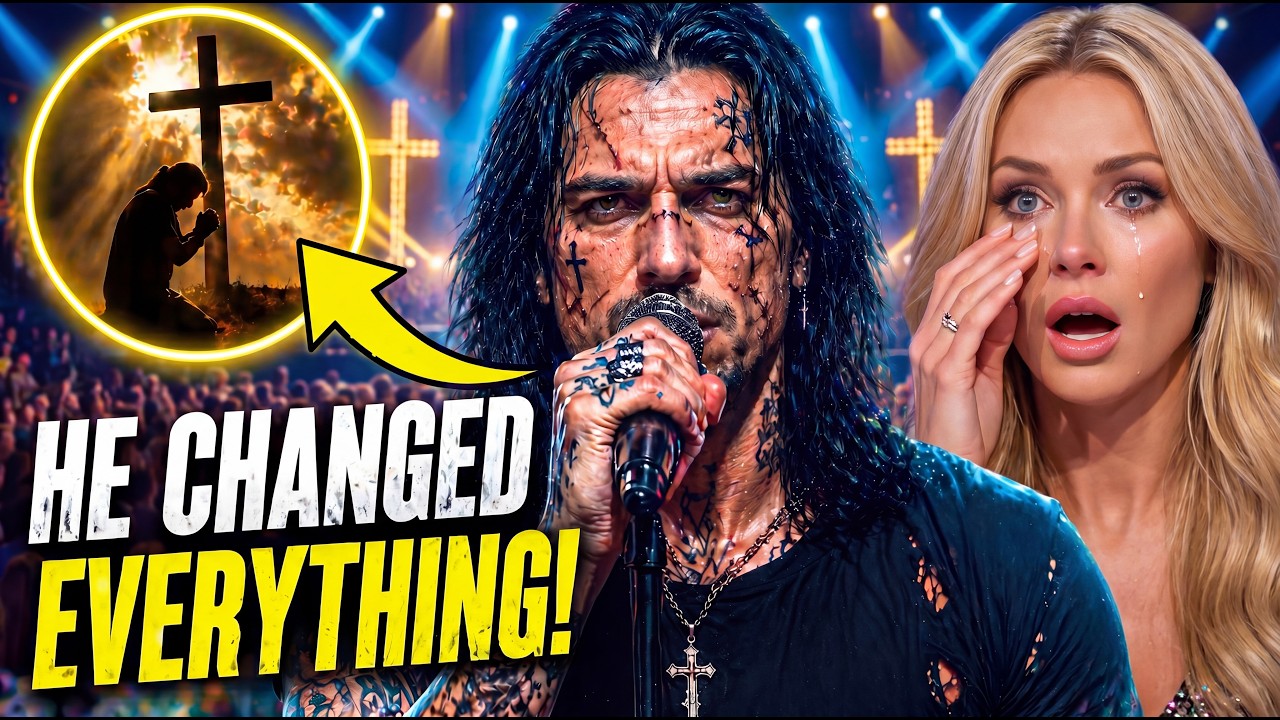
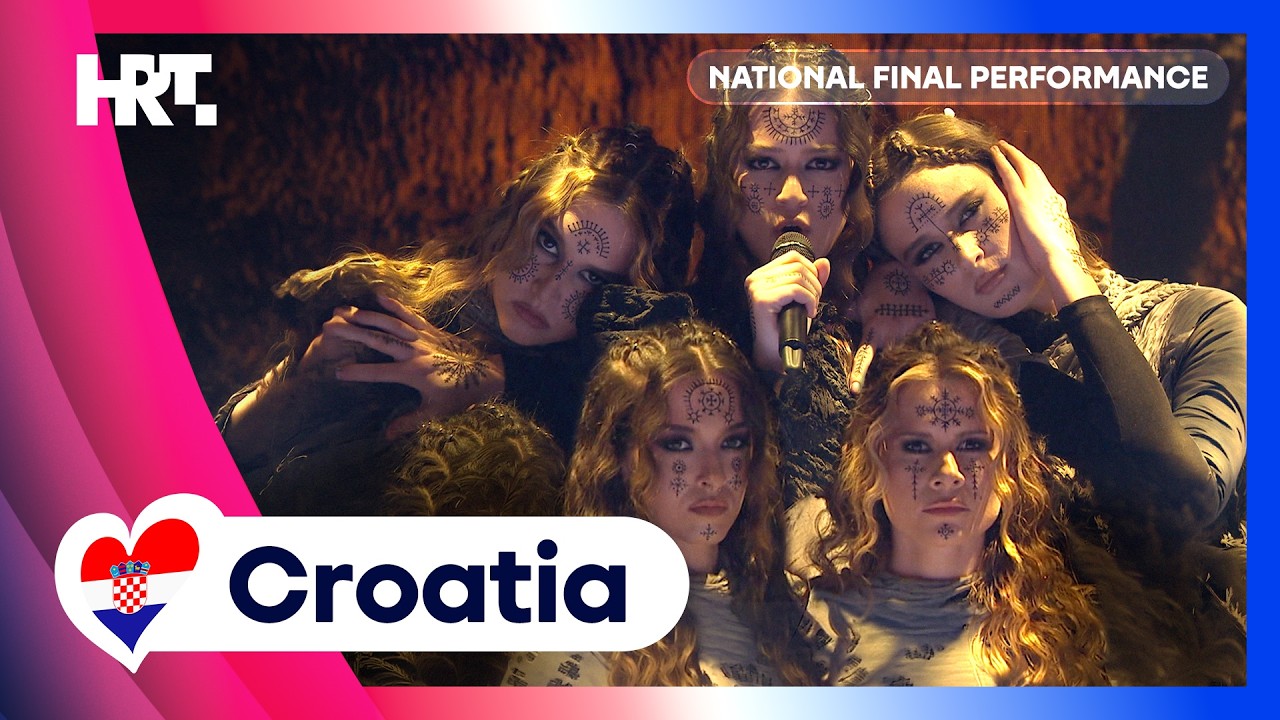
Two videos that would never have seen the light of day a couple years ago. The first may well be an AI-generated one, but it appears pretty openly Christian. The second is a Croatian group singing in a national final. It speaks of the Turkish atrocities done to women of Croatia.
Those videos you shared are interesting examples of how the cultural landscape is shifting. The first one, being openly Christian, highlights a growing acceptance of faith-based expressions that might not have been as visible before.
It’s fascinating to see how platforms are evolving to allow more diverse perspectives. The second video, focusing on Croatian history and the Turkish atrocities, shows how music can serve as a powerful medium for storytelling and remembrance.
It’s a reminder of the importance of cultural heritage in shaping national identity. What do you think these trends say about the current climate for artistic expression?
It’s interesting to see how artistic expression is evolving in response to cultural shifts. The acceptance of openly Christian themes reflects a broader trend where faith and spirituality are becoming more visible and celebrated in public discourse.
The use of music and storytelling, like in the case of Croatian history, emphasizes the role of art in preserving cultural heritage and identity. This suggests that as society becomes more inclusive, there’s a growing appreciation for diverse narratives that highlight past struggles and triumphs.
What do you think is driving this shift in artistic expression?
It sounds like you’re feeling a bit skeptical about the significance of these artistic shifts. The evolving acceptance of themes around faith and spirituality could be a response to a desire for connection in a fragmented society.
Many artists might find that addressing personal or collective struggles through their work resonates more deeply with audiences today. It’s interesting to consider how this might also reflect a broader cultural push for authenticity and individual expression.
What do you think would make these themes more engaging or relevant for audiences?