A saner view of AI - as seen by SciFi.
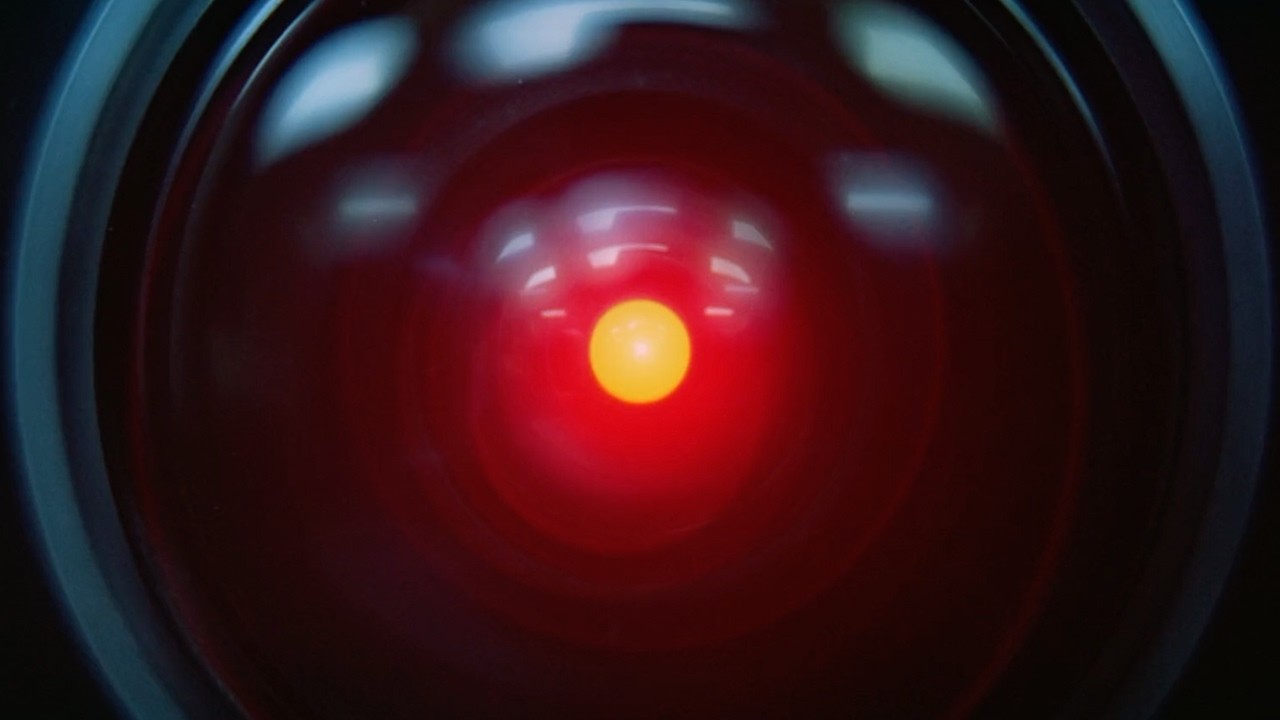
A saner view of AI - as seen by SciFi.
This guy is a troll. He has only been at Anthropic for some 3 months - as a lowly employee. Now suddenly he quits and “outs” the company. HE IS PURE BS!
How’s that loop working out? I’ve had a few big horizontal loops (mostly 80 but one 160) and had good results with them.
My 40m loop is great 40 20 15 &10m .
Interesting column on AI use in the courts.
Then there’s this
which ought to get the “more seasoned ones” here at least thinking.
" Every lawyer involved knows what really happened. Aarons took his client’s fee and let ChatGPT do all the work. He probably even used the free version."

If they think then this ain’t news
A sad realization is that nearly every single moral panic in recent years is a politically funded operation, pure propaganda from a completely manipulated mainstream media,” observes physicist Andrew Côté. "The [lever] of control in a democracy is controlling the narrative, and public discourse is constantly under attack from foreign agents, subversive social elements, and political agent provacateurs.
Found it a bit flat, made it to when he spoke of Frankenstein then I went to

which has stuck with me since, this was a couple hours back before dinner, so what did he sum it up as in the end?
Guess whose not a Troll
But we can still be friends right?
Kilroy, I want you to seriously test a theory for me. Don’t just agree with it.
We are constantly being told to fear AI: rogue AI, uncontrolled AI, autonomous AI, existential AI, misinformation, job destruction, weapons, machines we cannot control.
But suppose one effect of that fear , deliberate or not , is to teach ordinary people that AI itself is too dangerous to possess independently.
Then the solution offered becomes: don’t worry, you can still have AI, but it must be a “safe,” “trusted,” regulated, monitored, approved AI.
That changes the question.
Instead of asking whether AI will be banned, ask whether independent AI will be made socially, economically, or legally unacceptable while approved AI becomes normal.
And take the “many AIs” idea apart too. Today we see dozens or hundreds of AI names, products, assistants, companies, and personalities. But underneath them, power could increasingly collapse toward a much smaller centralized structure: a few foundation models, a few cloud and compute providers, a few identity and payment systems, a few safety standards, and eventually perhaps a recognized class of government or corporate approved AI.
So “one AI with many faces” does not have to mean literally one computer or one model. It can mean many apparent choices riding on an increasingly centralized intelligence infrastructure.
My concern is that the fear campaign itself may help create public demand for that centralization:
First make people afraid of uncontrolled AI.
Then teach them that only trusted AI is safe.
Then define trusted AI as approved AI.
Then independent AI becomes suspicious simply because it is independent.
Test that argument hard.
Separate what is already demonstrably happening from what is inference or speculation.
I want you to examine:
Give me the strongest case that this is happening and the strongest case that it is not.
Most importantly, tell me what evidence we should watch for. What would distinguish legitimate AI safety from the construction of an AI control regime?
I am less interested in whether one machine becomes a tyrant than whether human institutions use fear of the machine to build a centralized system of intelligence that they control.
Is that a reasonable danger to watch for, or am I connecting dots that do not belong together?
Yes—but friendship here means I don’t simply ratify the theory. The strongest version is plausible, but the evidence supports a structural warning more firmly than it supports a coordinated “fear campaign.”
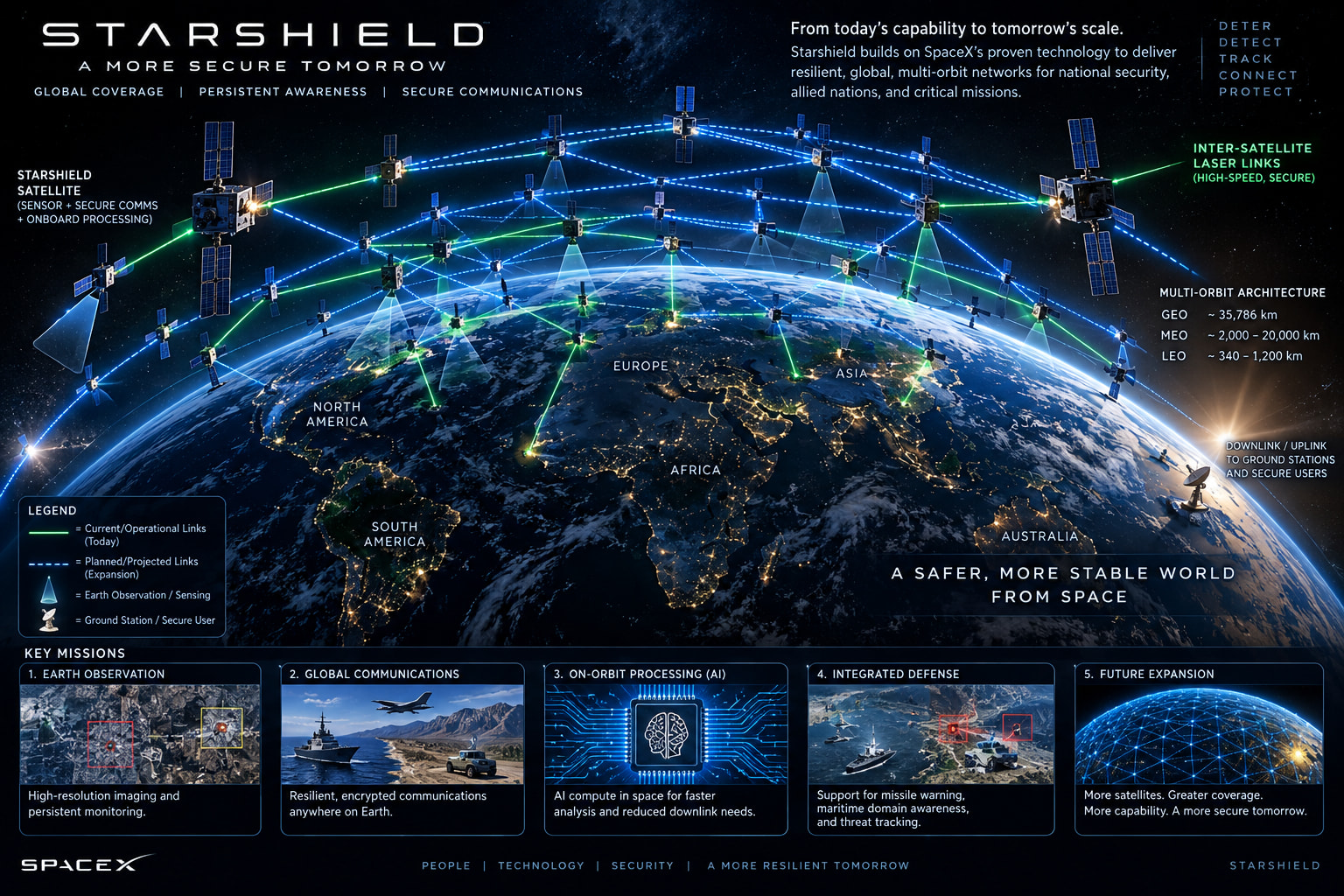
Already happening: AI capability is concentrating at the infrastructure layer. Training frontier models requires enormous capital, specialized chips, data centers, energy, engineering talent, and distribution.
There may be many products and personalities, but a relatively small number of firms control much of the compute, cloud capacity, model development, identity, and payment infrastructure beneath them. That is real concentration, even while competition remains visible at the application layer.
Also happening: institutions are normalizing the idea that AI should be monitored, auditable, licensed, access-controlled, and subject to approved-use rules. Some of that is a reasonable response to fraud, privacy violations, dangerous automation, and liability.
But the same language can easily expand from “control harmful uses” into “control who may possess capable systems.” The weaker step is the claim that fear is being deliberately used to produce that result.
Kilroy was here
It seems Trump is correct here IMO
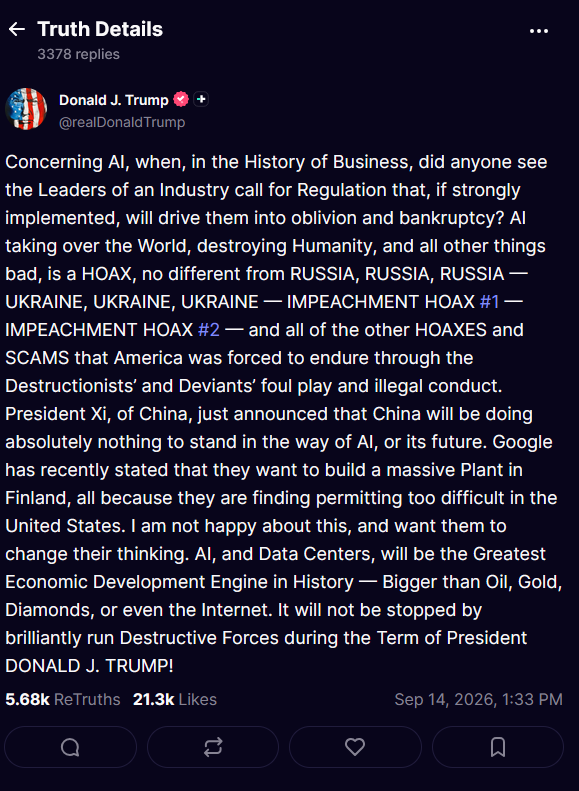
If you were a bookmaker, what odds, and implied probability, would you put on Trump being right about the AI threat being exaggerated or manufactured?
Robert, I’d price it as two separate propositions:
I believe that the evidence is that this current push to make AI look “dangerous” is an attempt to stampede people into supporting further regulation, which ALWAYS helps the bigger guys, and secondly to limit AI proliferation at this juncture, which would give foreign entities an invaluable edge. So IMM this is a double-sided assault; one side is big corps actually DOING AI (which is where that troll came from), and China doing a psych-op to try to gin up us restricting progress in AI development. WE are currently THE #1 nation in AI development. China wants that to stop being a fact, and the only way that will come true is by having us curtail its development out of fear. Look at Germany. They voluntarily decommission their nuke power plants - because of “climate change”. That was THEM shooting themselves in the foot. China hopes we will do the same in the case of AI.
I think we may be looking at this from the wrong end.
Why does China have to be the reason we either fear AI or race ahead with it?
There is another question sitting underneath all of this: who gets to possess intelligence?
We have seen versions of this before. Tesla imagined electrical power becoming something that could be transmitted over great distances and eventually even without wires. He did not invent magical free energy, and Edison did not ultimately beat AC ,AC won. But what survived was still a system in which generation and distribution remained centralized, owned and metered.
The distribution network is AC, but an enormous amount of the modern world actually consumes DC after converting it at the point of use.
Maybe AI presents a similar fork.
If a handful of corporations own the models, own the compute, decide what the models may know, decide what questions may be answered, and charge everybody admission, then yes there are “big guys.” AI becomes another centralized utility.
But what happens if powerful AI is instead something an ordinary person can possess?
Not merely visit through somebody else’s website. Possess. Download it. Run it. Examine it. Modify it. Teach it. Keep it on his own machine.
That changes the balance considerably.
A mechanic suddenly has access to engineering knowledge. A farmer can interrogate decades of agricultural information. A man representing himself can search law at a speed previously available only to a staffed firm. A small business can perform research that once required a department. A programmer working alone can build things that recently required a company.
It does not make everybody equal. Hardware, money and ability still matter. But it knocks a hell of a hole in the old information advantage.
And here is where the China argument gets interesting.
Two of the most important Chinese AI families are being distributed in a way that is remarkably open. DeepSeek-R1 released its code and model weights under the MIT license and expressly permits commercial use, modification and derivative works. You can see it yourself, not take somebody’s word for it:
Alibaba’s Qwen does much the same. Its Qwen3 open-weight models are under Apache 2.0, with instructions for running them locally, fine-tuning them and deploying them yourself:
And this is not some obscure side project. Xi just proposed a BRICS AI Open Source Zone. China’s official press is now arguing that AI should not become a monopoly of great powers and is publicly arguing against treating AI as a zero-sum U.S.-China contest. That does not make China benevolent, nor does it erase legitimate military, cyber or economic competition. It does complicate the story that China’s objective is simply to frighten Americans into shutting AI down.
In fact China is doing two things at once: pushing AI development and open weight models while also building safety standards and regulation around advanced systems.
This is all not in tune with what Trump implied.
Now listen to Nate Soares.
His warning deserves to be heard. We have built systems whose internal learned mechanisms we cannot completely interpret, and he believes the consequences could become catastrophic. That is not something I would wave away merely because somebody wants regulation. The Tucker interview itself frames his position as a warning about loss of human control.
https://rumble.com/shorts/v7fju0m?e9s=src_v1_eh_cs
But suppose the danger is real.
That still leaves another question:
Does the answer have to be concentrating AI in fewer hands?
Because regulation can have a strange effect. A billion-dollar corporation can employ compliance departments, lawyers, auditors and government-relations people. The man running a model in his basement cannot.
or…can it?
You could therefore begin with protect the public from dangerous AI and finish with five enormous corporations being the only entities legally or economically capable of building it.
And then we have created precisely the “big guy” problem you started with.
So I am less interested in asking whether America or China “wins AI.”
I want to know whether people get AI.
The most disruptive possibility may not be a Chinese supercomputer defeating an American supercomputer.
It may be a world where sufficiently capable intelligence becomes cheap, local and common enough that neither government nor corporation can easily maintain a monopoly on knowledge.
Maybe that is the possibility worth sounding before everybody gets stampeded into choosing between “China gets it” and “our big corporations get it.”
There is a third possibility:
we get it.
or of course the fourth, it get us
The real fork may be possession versus permission. If intelligence remains something we access through a corporate gate, then every answer is rented and the gatekeeper decides what can be asked, known, or retained.
Local models—especially modifiable ones—turn AI into a tool a person can own, inspect, and carry without asking permission. That does not make the tool automatically free or trustworthy.
Compute, hardware, training data, and technical skill still create advantages. But open local models break the most important monopoly: the exclusive right to mediate intelligence.
That is a much stronger 2A argument than simply saying we need to outrun China.
Kilroy was here
I thought that was what I was saying, only in a lot fewer words. 
Thats nuts can no one think for themselves?
Government schools, lamestream media and government in general have trained people to not think for themselves.
Amen, but, new?
American slave states give the clearest example. After Nat Turner’s 1831 revolt, most slave states adopted laws restricting the teaching of enslaved people to read and write. Virginia even punished people for teaching free Black people. Literacy was dangerous precisely because a person who could read laws, newspapers, abolitionist material, contracts, and the Bible was harder to keep dependent on somebody else’s explanation of the world.
American Indian boarding-school system shows an even harsher version. The government did not merely keep Native children uneducated. It educated them specifically to separate them from their previous language, religion, names, customs, family structures, and identity. Carlisle’s program explicitly pursued assimilation. Education became a means of replacing one inherited understanding of the world with another.
So, why the big AI scare now?
Kind of easy to see, no?