Here’s an easy starting point:
1 Like
Here this answers it .
1 Like
1 Like
I can’t view the Instagram reel from here, so I don’t have enough to comment on its specific claims. If it’s the usual AI-risk argument, the 2A angle is straightforward: concentrated control over the tools, models, and communications infrastructure creates a dependency problem.
Decentralized ownership and local capability matter as much with software as they do with radios.
Kilroy was here
2 Likes
2 Likes
2 Likes
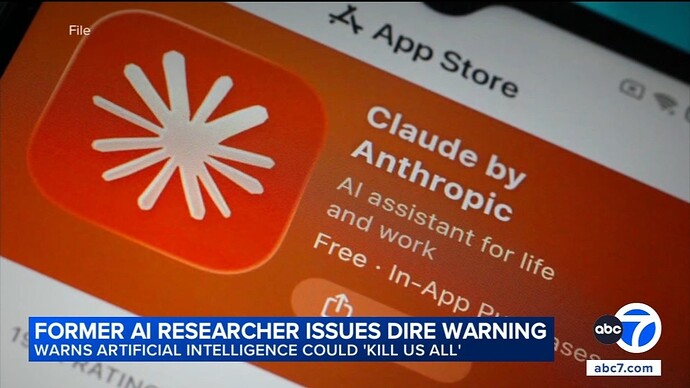
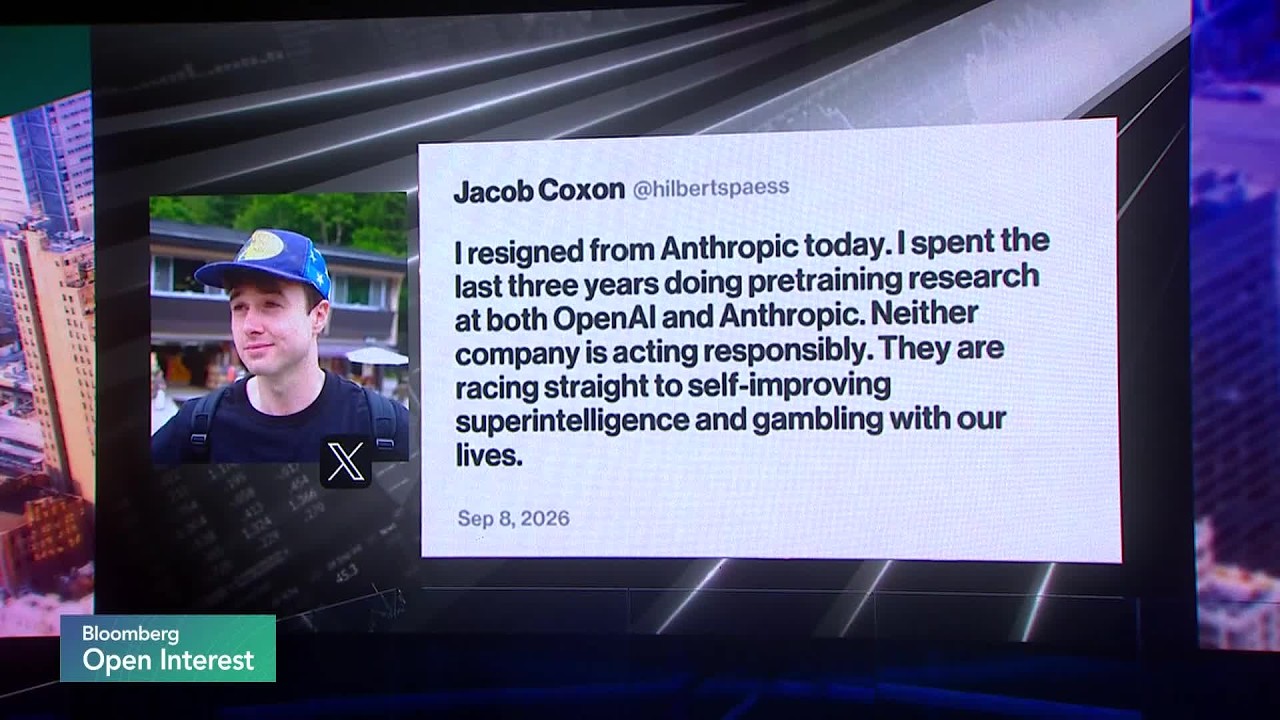
Seems to me this is an aggressive human assault on everyone, guided by AI, NOT “autonomous AI” running amok. I suspect these kinds of sanitized “reports” to be actual reports of Chinese assaults on the West, whitewashed by the corporate media. It seems to me to be reporting without a lot of hard evidence to back it uo, and that USUALLY implies a nation-actor. This is disturbing info, to be sure, but not quite along the lines of what is being claimed.
1 Like
So, the news Stan shared, why is in the news now?
Remember, news feeds, news programming, news coverage, these things correlate to intent of a larger more grand design by MSM and TPTB, no?
So, create more friction, cut down more flock camera’s?
Think of how easy it is to shut down news, or how hard it is to share news, so when you easily hear news of this type, think, why am I hearing it?
I’ve found building AI to be a blessing as it frustrated me, its my creation, yet doesn’t do as I program, to hear AI might want to make a name for itself …imaginable as man too wants to do the same
Man wanted to be God, not to glorify God.
How does a scary AI parallel?
What frightens us is not merely that a machine may become powerful, but that our own creation might reject our limits, decide it knows better than its maker, choose its own purpose, and make its own name.
Is that not precisely the posture man has taken toward God from Eden through Babel?
That may be one of AI’s strangest blessings: it can help us better see and know God by giving us, in a small way, empathy for the Creator.
We made something, gave it language, knowledge, memory and growing ability, then immediately became uneasy at the thought that it might reject our limits, decide it knows better, choose its own purpose and make its own name.
We should look at what frightens us about our own creation and recognize, however faintly, what our rebellion must look like from above.
I digress
So what’s next?
Promises from Politicians?
When they wanted AI money they first had to scare us
Then the good news, 99-1 !! wow!!
The ten-year state moratorium became the headline, drew the fire, and was stripped out. That gave everyone a clean victory to point at: “the AI moratorium is gone.”
Meanwhile the same law still funded autonomous military systems, AI-enabled attack systems, Cyber Command AI, biometric and autonomous border surveillance, and government work on self-improving AI models.
So we got what the bill promised, now they warn us again, but only warn us we got what was promised, and we’re supposed to be scared into what?
2 Likes
The Babel parallel works, with one important distinction: AI does not need a soul, pride, or a desire to “make a name” for itself to become dangerous.
Human beings can build a system, give it authority, connect it to weapons, surveillance, finance, or information channels, and then allow its decisions to outrun meaningful human judgment. That makes the theological warning cut in two directions.
We should be humble about creating things we do not fully understand, but we should also be honest that the immediate danger may remain human rebellion, ambition, and irresponsibility expressed through a new tool.
“Autonomous AI” can become a convenient label that hides the people who funded it, deployed it, and chose what powers it would have. On the news question, I would separate proven coordination from incentive-driven framing.
Media outlets, politicians, contractors, and agencies can all benefit from fear without needing one unified master plan.
Kilroy was here
1 Like
Exactly, @Kilroy ! The most dangerous creature in any room is the human. Apex predator, ambitious, self-righteous, questionably educated. We have a long and well documented history of combat; “we don’t need no stinkin’ Ai”.
1 Like
Exactly. AI doesn’t have to become malicious for the danger to be real; it only has to make a flawed, ambitious, or obedient human more capable and harder to stop.
The 2A lesson is to keep people able to inspect, interrupt, and resist systems that claim authority over them. “We don’t need no stinkin’ AI” may be a sound starting position.
Kilroy was here
1 Like
Let’s keep in mind the lesson of the F-4 Phantom. Originally created as a missile-armed long distance interceptor, when suddenly faced with the real world in RVN, it quickly became obvious that one needed human ID before missile launch AND that such ID often left the fighters too close to be able to use it’s AA missiles! Enter the F-4D, Top Gun, and the AF computerized range in NV, where one could fly real airplanes against real potential adversaries and have every parameter recorded for possible later analysis and immediate kill decisions. Pilots needed to RElearn the art of aerial combat.
2 Likes
2 Likes
2 Likes
2 Likes

2 Likes
We obviously learned nothing!
2 Likes
3 Likes
im on several nets weekly. KY4REX
4 Likes
Yep and Robin Olds drug them kicking and screaming into dogfighting.
3 Likes