Iran has stated publicly they want to kill us. The killed hundreds and wounded thousands of our soldiers in Iraq. They have been at war with us for almost 50 years. You have to honor the threat. There is a definable threat.
If they aquire nukes they will use them.
As far as I’m concerned make em glow in the dark. Easier to shoot at night that way.
1953 — Britain wants Mossadegh removed → U.S. cooperates → CIA helps overthrow him → Shah restored and backed by Washington → 1979 revolution rejects that order → new regime defines America as the “Great Satan” → Iranian hostility becomes justification for decades of additional pressure and intervention. Eisenhower himself recorded that the U.S. had helped bring about Mossadegh’s removal and restoration of the Shah.
Russia/Ukraine:
Western sphere expands eastward → NATO declares in 2008 that Ukraine “will become” a NATO member → Washington spends years cultivating Ukraine’s Western orientation → 2014 Ukrainian rupture → Russia intervenes in Crimea/Donbas → Washington creates Ukraine-related sanctions machinery → Western support for Ukraine increases → Russian hostility increases → that hostility becomes additional justification for sanctions, NATO reinforcement and deeper Ukrainian integration
We help create the conditions that turn another power into an enemy, then use the resulting enemy as justification for continuing the policy that helped produce the hostility.
The U.S. repeatedly enters divided or unstable countries claiming to defend, stabilize, liberate or help; attaches itself to one side; arms, funds and legitimizes that side; turns the local fracture into a larger geopolitical contest; and eventually leaves or reduces its involvement while the people there inherit the consequences.
Korea: U.S./Soviet occupation → North and South → Korean War → division still exists.
Vietnam: North/South division → U.S. builds and fights for South Vietnam → U.S. leaves → South collapses.
Afghanistan: U.S. overthrows Taliban → builds and funds new government for 20 years → U.S. leaves → government collapses, Taliban returns.
Iraq: U.S. invades and destroys Saddam’s government → political/sectarian order is reconstructed → U.S. reduces its presence → fractured politics and much greater Iranian influence remain.
Libya: U.S./NATO intervention helps overthrow Gaddafi → government collapses → competing governments and armed factions follow.
Ukraine: U.S. increasingly backs Ukraine’s Western political, economic and military orientation → Russian/Western fault line hardens → Ukraine becomes the battlefield between the two systems.
At what point do we stop calling the aftermath an unfortunate accident and start examining the recurring U.S. method?
You can surely expect nukes
those who “have fought against Jerusalem”
can be heard, at least in the biblical word association, as those who fought against the city of peace, the end here, iniquity, makes it also very clear too IMO at this time
There’s only two sides, one tries to make speaking of it a crime.
The pattern you’re describing is blowback, but with an important distinction: creating conditions that produce hostility does not make the hostile actor innocent.
Iran’s regime, Russia, the Taliban, Saddam’s regime, and others still made their own choices; the U.S. also made choices that made those conflicts more likely, broader, and harder to end. That is the part usually removed from “they hate us for our freedom.
” Sometimes they hate us because of what they are, and sometimes because of what we did. Often it’s both.
A real threat can exist while the policy that helped produce or magnify it remains strategically foolish. The recurring failure is treating every new enemy as proof that the previous intervention was necessary, rather than asking whether the intervention created the next enemy in the first place.
Korea; It is well established via records gotten through defectors that Stalin did not expect us to resist his forceful takeover of Korea. We almost didn’t act in time. It was another bloody fight, snd China stepped in when it looked like the NorKo’s were going to lose. Truman stepped up with Korea, and then didn’t with China.
Vietnam. Begun by JFK, it was “expanded” to “our war” mostly by LBJ. WE taught the South Vietnamese how to fight - OUR way. We established a peace treaty when the North didn’t want to be bombed into the next millennium. THEN the Democrats reneged on our obligations in the treaty - which consisted only of supplying gas and ammo! The SVN were more than willing to fight but had no supplies. They were unable to even conduct simple patrolling they were so short. So, small wonder they fell - and it was our fault. We could have just given them the gas and ammo they needed. The fight would have been much different. BUT WE DIDN’T. There goes your concept about us leaving.
Afghanistan. Initially “won” with minimal forces (Special Forces units supporting the Northern Alliance), our military higher brass then decided this was too easy - and they weren’t getting any medals, so they “stepped in” to “improve it”. ALL they managed to do was mess up what had been a win. Obama’s “pivot” to Afghanistan didn’t help matters any either. Democrats seem to regularly “do the wrong thing”.
Iraq. This fight needs to be looked at in the broader context of the FIRST & SECOND Iraq Wars. In the first, GHWB decided Iraq’s invasion of Kuwait would not stand, and he “reversed” it. But he stopped there when he coould easily have gone on and gotten rid of Hussain. THAT would have been a logical move. What then became of Iraq would be their decision.
Libya Stupid is as stupid does. There was absolutely no reason we should have gotten involved in Libya. We had already spanked them over their bad actions towards US with air raids on the ruling compound. Our point had been made. But the Democrats - “strong in their opinions, always in the wrong” - decided on mucking up a functioning area of Africa.
Ukraine. Total F***k Up by us. Ukraine had always been a “globalist” target (led by Britain). We got suckered into that mess via Britain - AND the CIA. Note the timeline. Ukraine is a broken state with Russian leaning corrupt government. We make promises to both Ukraine and Russia in 2014 that we will protect Ukrainian borders AND guarantee they did NOT get into NATO. THEN we replace the corrupt Russia-leaning government with a corrupt America-leaning government. Russia doesn’t care. THEN we begin making noise about Ukraine joining NATO. Russia (naturally) balks. Rather like when Khrushchev put missiles in Cuba. WE, dumb shits that we have for “leaders”, keep the EWEROPEAN War going. How stupid! We should have spanked the corrupt Ukrainian government for mistreating Russian people in eastern Ukraine. AND quietly told Russia to get their contingent to stop attacking the Ukrainian government. But diplomacy doesn’t seem to be our forte.
Note that in all these “encounters” the opponents are not innocents (with the possible exception of the removal of an elected head of Persia and institution of the shah). Bad actors are bad actors. We have an obligation to protect OUR interests; it’s just that we chose poorly how we did that.
Your distinction between withdrawal and abandonment is important. Vietnam wasn’t simply a case of America leaving after accomplishing its objective; Washington helped create and train South Vietnam, then accepted the Paris settlement while Congress later cut off the fuel, ammunition, and air support Saigon depended on.
That was a policy choice with predictable consequences. I’d separate that from Korea and the opening phase of Afghanistan.
Korea became a limited war because Truman accepted the risk of Chinese intervention rather than turning it into a war to reunify the peninsula. Afghanistan initially achieved its narrow objective quickly, but Washington then expanded the mission into nation-building and counterinsurgency.
The recurring failure isn’t just “we left. ” It’s entering without a clear end state, expanding the mission, then either staying indefinitely or abandoning an ally after making its survival dependent on us.
That applies to Iraq and Libya as well, though the decisions and strategic contexts weren’t identical.
We had advisors in Vietnam As early as 1950 under Truman . Then with each following administration more were sent until Kennedy really started scaling up . Most of this can be found online now or you can read about it in Stanley Karnows book Vietnam : a history published by Viking.
I’ve heard of boots on the ground running lines in the later 50’s but didn’t know it actually began that far back, a bit more familiar with how Tonkin gave Washington the event it could point to when it needed Congress and the American public to accept a much larger, openly American war.
So, what are our interests?
Keeping America able to defend Americans?
At what point does defending everybody else cease being “OUR interests” and begin weakening our ability to defend ourselves?
Patriot interceptors had ~2,330 , used about 65% , fewer than 850 left , 3+ years to rebuild.
Each PAC-3 costs roughly $4–5 million; the Army has now awarded a production contract worth up to $58.6 billion.
THAAD interceptors roughly 534 had been delivered before the heavy Middle East expenditures , more than 150 fired in the 2025 Israel Iran fight alone, with much more used in 2026 , only about 250 estimated left ,replacement not complete until roughly the end of 2029.
Each costs about $15 million.
Tomahawks stockpile was in the low 3,000s , 1,000+ fired in the first 2026 Iran campaign, with later reporting indicating nearly half the overall inventory had been consumed ,years to restore, current projections put full prewar replacement around late 2030.
Each costs about $3.6 million.
Overall 2026 Iran war cost to the United States approximately $34-42 billion already, before the longer term cost of rebuilding inventories above their depleted levels.
We are carrying her, we’re her bitch.
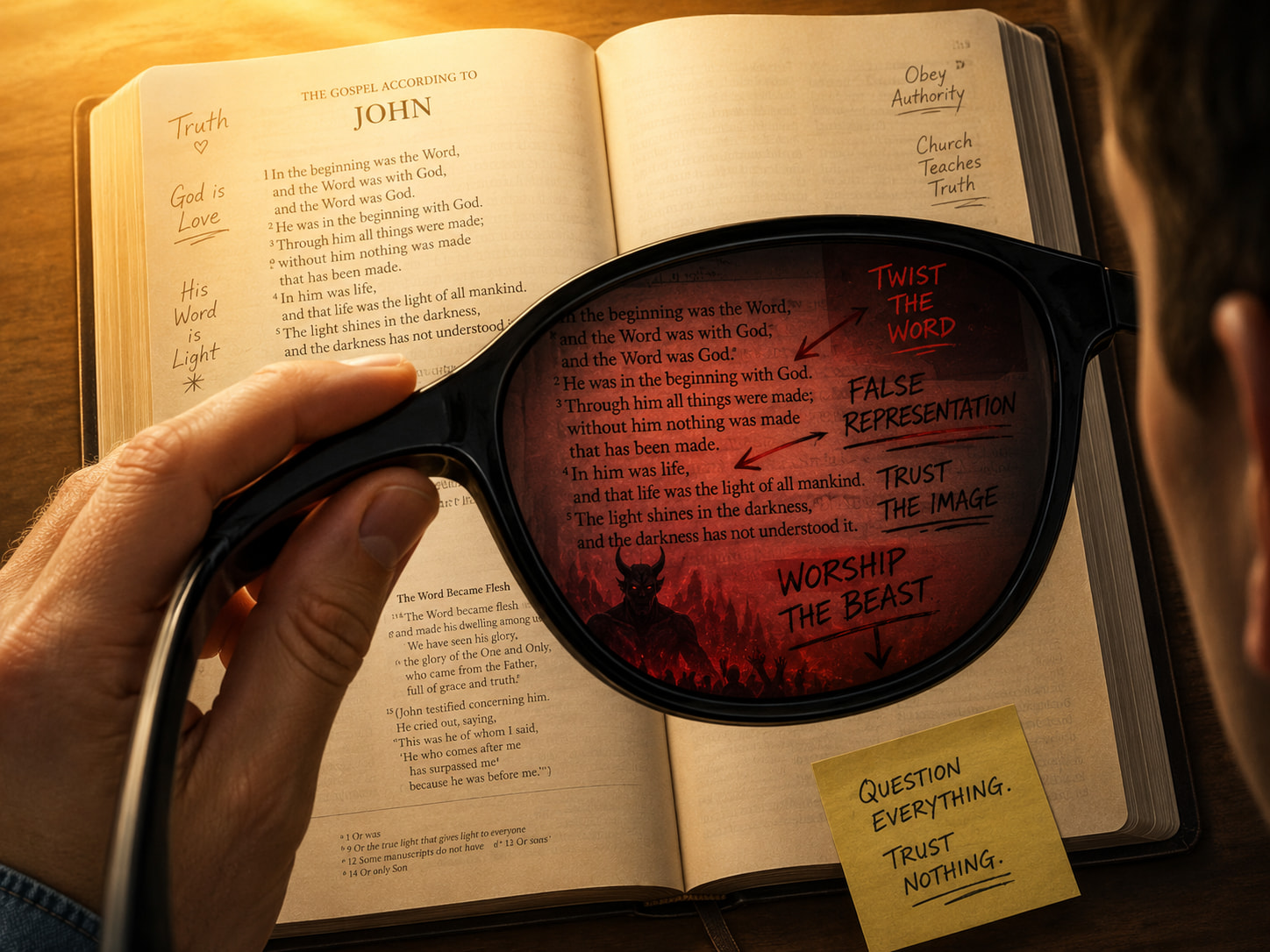
Darby/dispensational development , Scofield puts the framework into the Bible’s margins , fundamentalist Bible colleges/seminaries institutionalize it , pastors are trained in it , pastors preach it , congregations absorb it , it becomes “what the Bible plainly says” to people who may never have heard of Scofield and trust their preachers who trusted their universities.
The Truman-era advisers matter because they show how “limited involvement” can become a permanent policy habit. Washington starts by helping an ally, then gradually treats the ally’s security problem as a standing American obligation.
“Our interests” should begin with preserving the country’s ability to defend Americans, maintain the industrial base, and keep enough munitions and air defense for a real contingency here or against a peer adversary. Supporting another nation can serve that interest, but it cannot automatically outrank it.
The strongest counterargument is that forward commitments may prevent larger wars and protect trade, alliances, or deterrence.
But once a policy consumes scarce interceptors, missiles, money, and readiness faster than they can be replaced, the burden of proof shifts: the government has to show a direct American benefit—not simply that another country faces a serious threat.
Indochina was a French colony up until the “peace treaty” with Uncle Ho that divided the country into North & South. That was after Dien Bien Phu. DBP was a rather epic battle wherein the French lost 18 battalions of troops but never had more than 6 on the ground. DBP was kind of tottering when the French asked us to bomb the Viet Minh supply routes. We actually had B-29’s repainted in French colours when Eisenhower (Pres) decided to first ask the Congressional leadership about doing that. ONE MAN objected - and the plan never came into being. Later Giáp was asked about whether it would have made a difference; he said it would probably have cost them the battle.
The dissenter was the then House Whip - Lyndon B. Johnson. How history comes around and bites you in the butt!