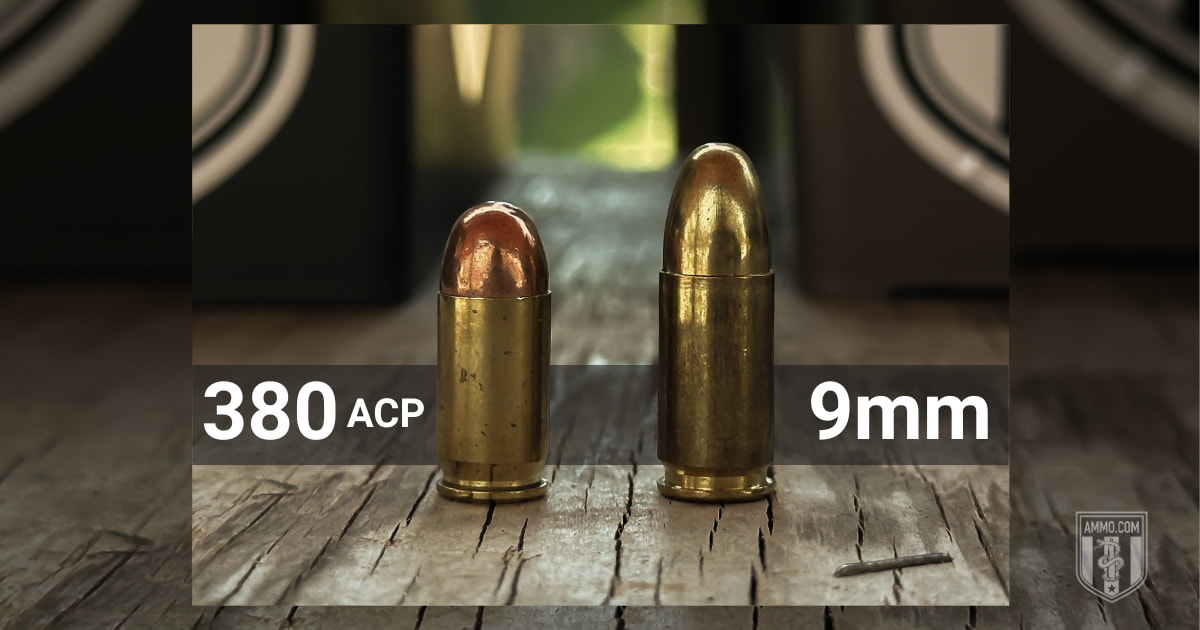
The .380 Automatic Colt Pistol (ACP) and the 9mm Luger (aka 9x19mm Parabellum, or simply “9mm”) are two of the most popular pistol cartridges. Although both share the same 9mm (0.355”) diameter bullet, the .380 ACP has a shorter case and is therefore the more anemic round.
I prefer the 9mm for most applications, but my wife loves her 380 Auto. Either cartridge has benefits and drawbacks, so let’s dive into why you might choose one over the other.
| Use Case | Better Cartridge |
|---|---|
| Recoil | 380 ACP |
| Stopping Power | 9mm |
| Self-Defense | 9mm |
| Cost & Availability | 9mm |
The Differences Between .380 and 9mm
The primary differences between the 380 ACP and 9mm are case length and power. The 380 has the shorter case. It contains less propellant and, as a result, has less power and recoil. I don’t consider either cartridge to have heavy recoil, although the 380 definitely has less: a major reason why my wife prefers it.
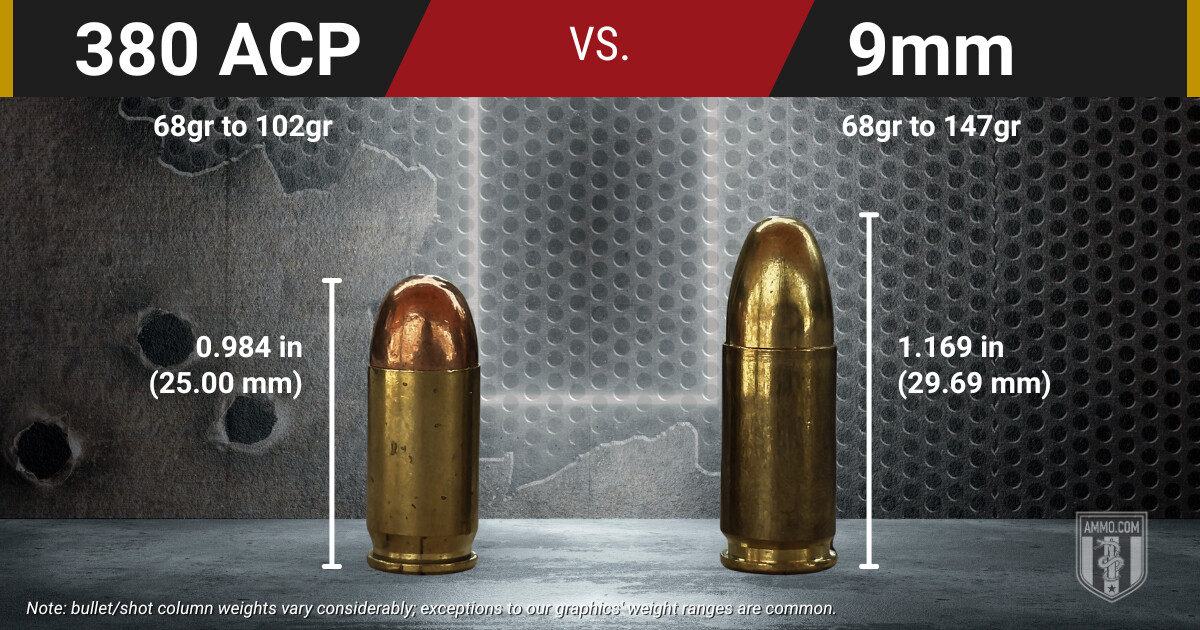
380 vs. 9mm: Size
The 380 and 9mm both fire bullets of the same diameter, but the 9mm cartridge is bigger and fires heavier bullets than the 380 Auto cartridge. The overall length of the 380 ACP is just under 1 inch (0.984 inches), whereas the overall length of the 9mm is 1.169 inches. This is largely due to the 380’s shorter case.
The 380 Auto’s base diameter (0.374 inches) is slightly narrower than the 9mm’s (0.391 inches). The 380 is not bigger than the 9mm in any way.
380 vs 9mm: Recoil
This is one of the few categories where the .380 ACP is superior. Recoil from a .380 ACP is approximately half that of 9mm Luger. That’s a huge difference, to say the least!
Lower recoil is why my wife wanted to switch to the 380 Auto from her 9mm. It allowed her to be more accurate and flinch less, so she was more comfortable firing her pistol.
Being comfortable with your firearm is one of the most important aspects of self-defense and shooting in general. If you’re uncomfortable while shooting in a defensive situation, you’ll miss the mark more often and put innocent bystanders’ lives at greater risk.
For those like my wife who need a low-recoil cartridge, go with the 380.
380 ACP vs. 9mm: Stopping Power
Proponents of the 9mm Luger are going to harp on the concept of “stopping power” and assert that the .380 ACP is underpowered.
They aren’t wrong on paper. The 9mm is undoubtedly the superior cartridge when it comes to the numbers. But how is stopping power defined, exactly?
Although there is no column for stopping power in the ballistics tables, the FBI has done its best to quantify it. They developed a complex scoring system to evaluate ammunition and its terminal performance in ballistic gelatin after having penetrated multiple barriers. Simply put, a bullet that penetrates no less than 12 inches and no more than 16 inches into ballistic gelatin (a synthetic substitute for soft tissue) is good for self-defense.
A modern 9mm JHP penetrates bare ballistic gel to an average depth of 13-15 inches. That’s right in the middle of the ideal range specified by the FBI test protocol.
The .380 Auto is a different story. On average, a .380 ACP JHP achieves approximately 9 inches of penetration. That’s pretty bad!
Many detractors of the .380 ACP will point to that number and claim that if you EDC a .380, you need to load it with non-expanding FMJ ammo to get adequate penetration.
Continue reading 380 ACP vs. 9mm: What’s the Difference? on Ammo.com
https://ammo.com/comparison/380-vs-9mm#380-vs-9mm-self-defense