Congrats! You’ve discovered our in-depth look at 17 HMR ballistics from all the major ammo manufacturers. Once you’ve found the right load, browse our selection of 17 HMR ammo – or grab bulk 17 HMR ammo if you’re stocking up – and have it quickly shipped to your door.
Click the links below to jump to your preferred ammo company and find the 17 Hornady Magnum Rimfire ballistics data you need for your favorite factory load.
Interesting stats. I have long been a fan of the .17 line necked from .22 rimfire. I even have a Kimber (Lord help me - one of the early ones when Kimber made real 1911’s, not a “collection of parts that happen to go in the same direction at that moment”) in the non-magnum version, and have been thinking about having some gunsmith build me an additional barrel in the magnum version and set up the recoil springing correctly to function, maybe even with a can.
One reason I like it is that it generally doesn’t skip. A .22 Long will skip if fired at a relatively flat angle at something on the ground. I’ve gotten at least two “skips” out of a pistol. NONE from the Kimber 1911!
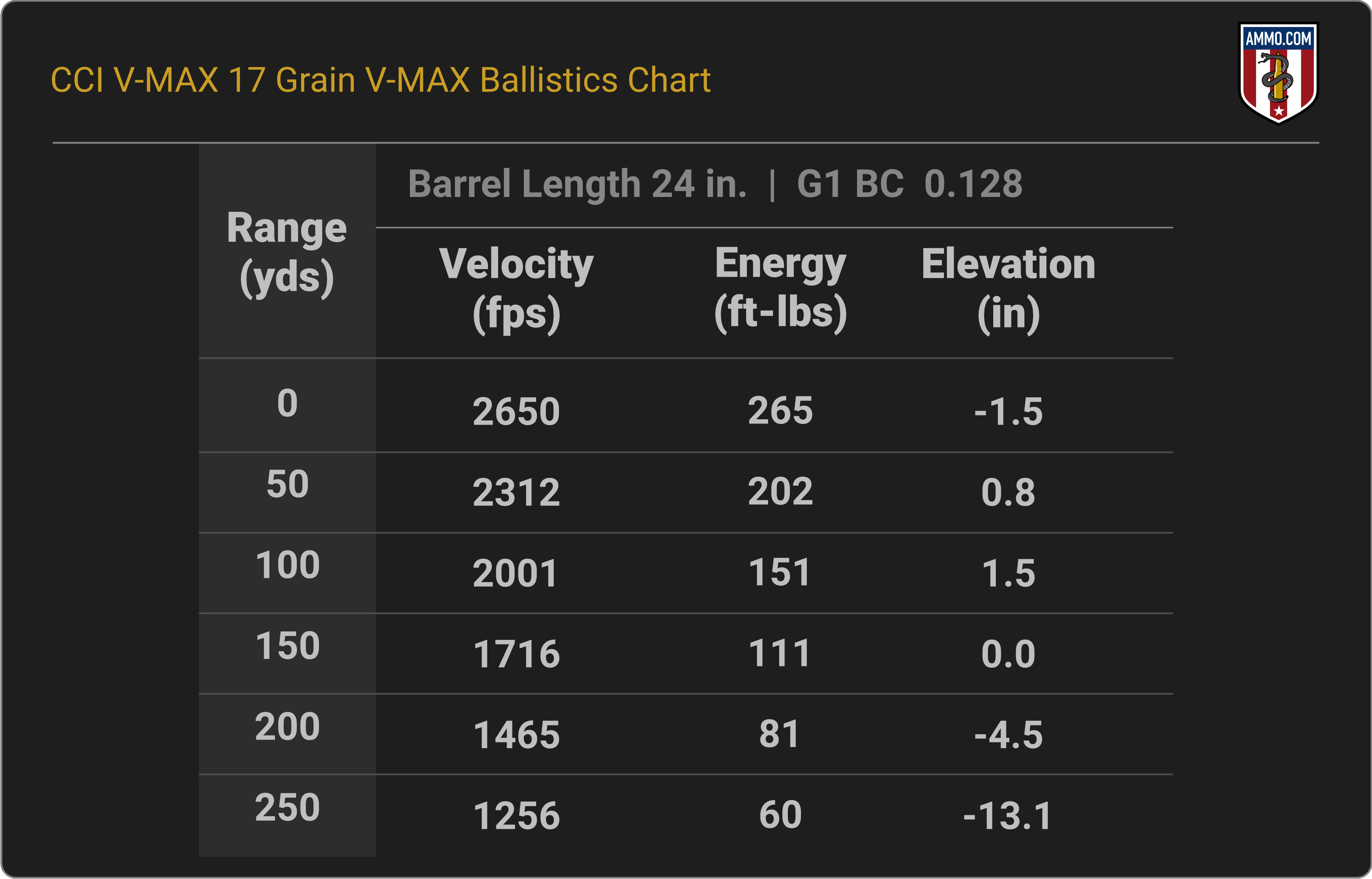
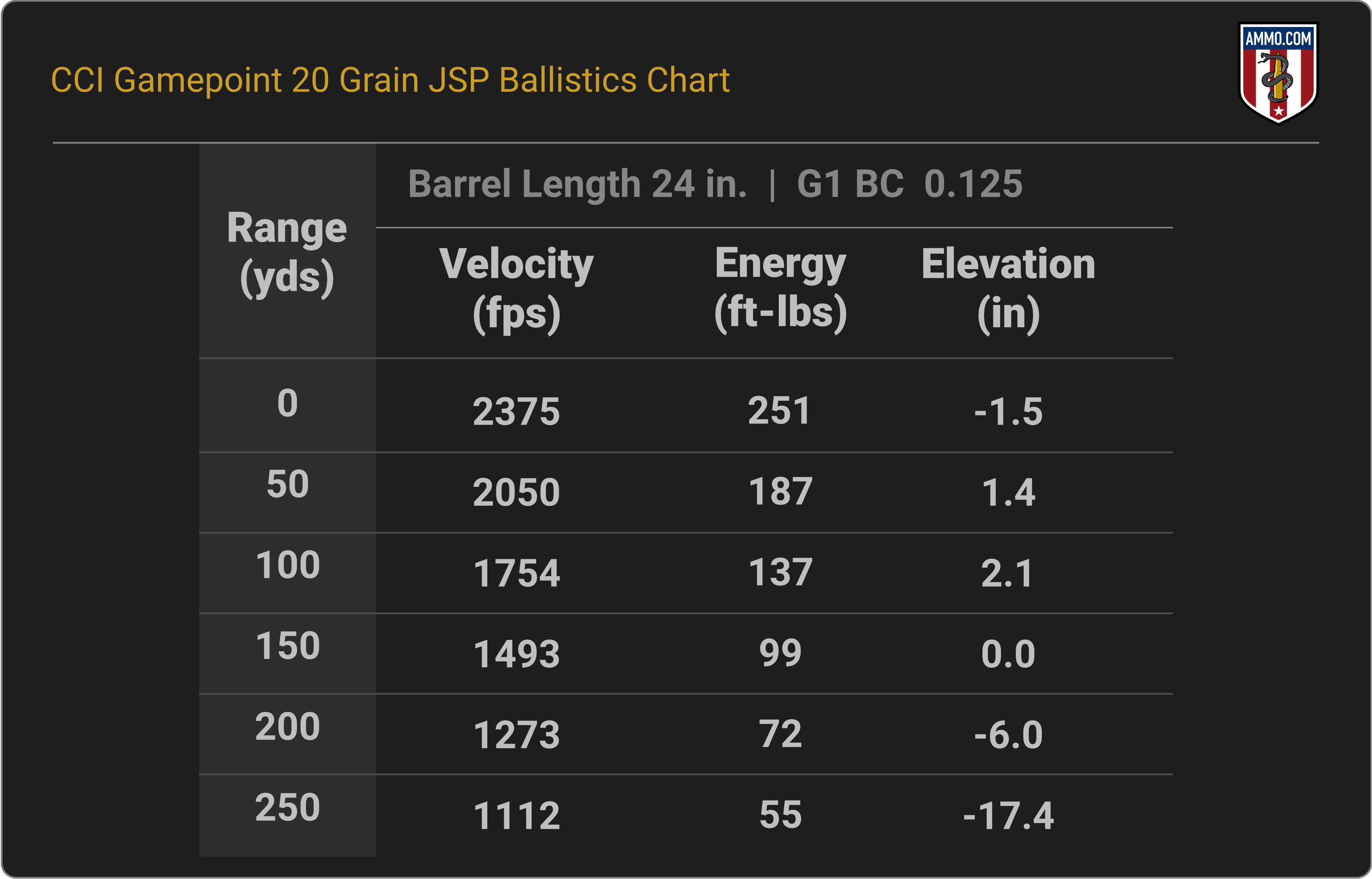
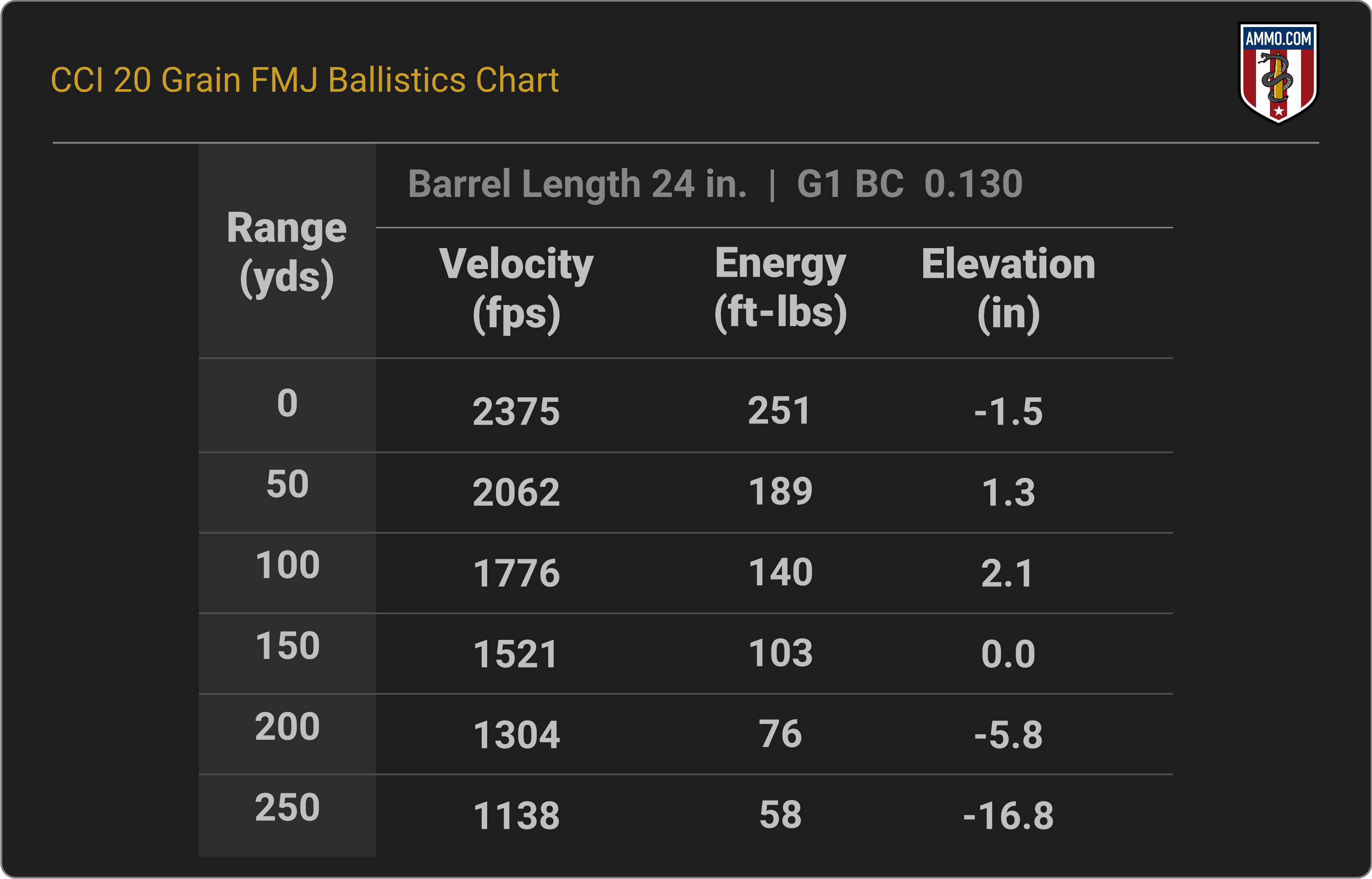
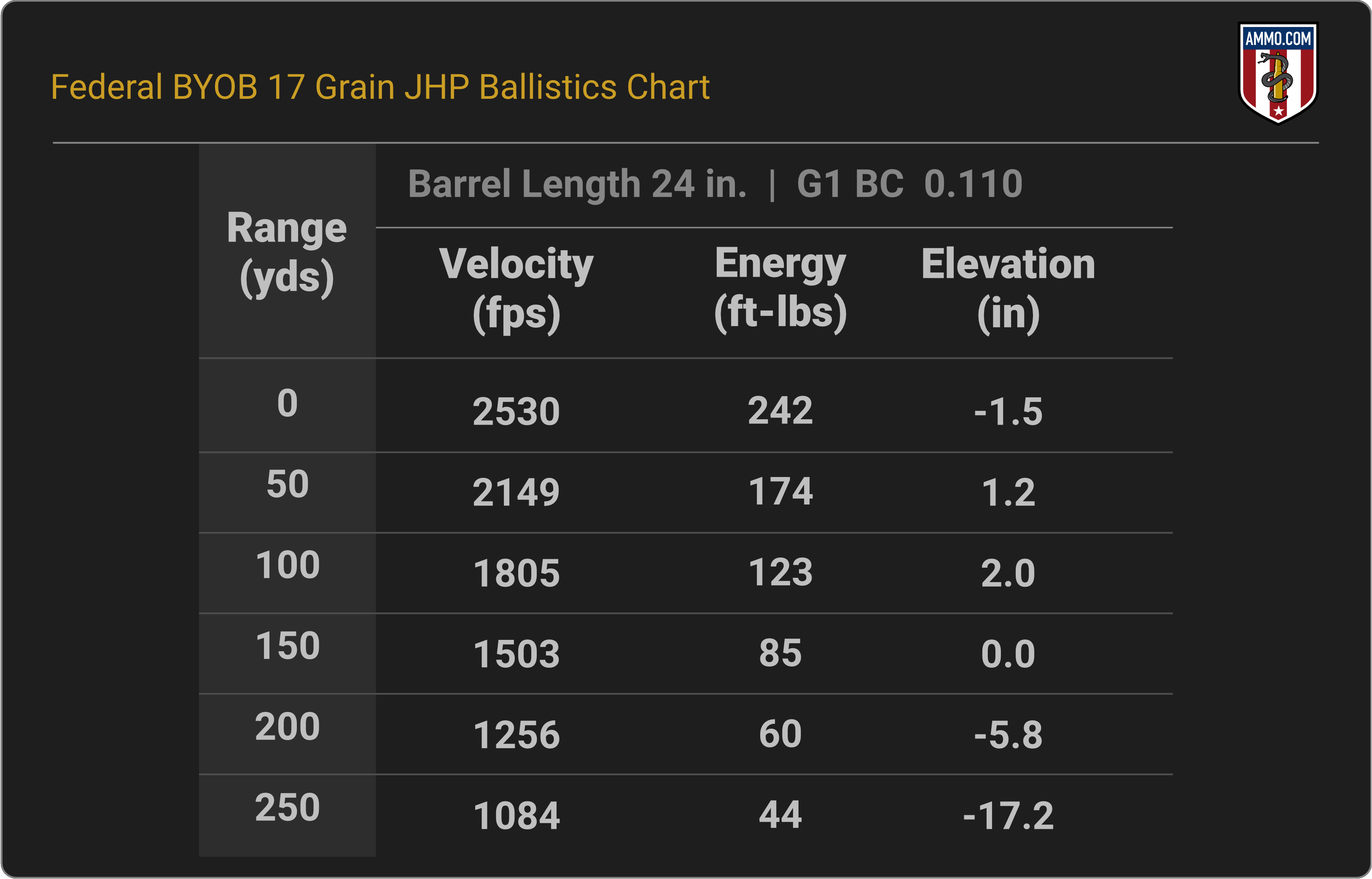
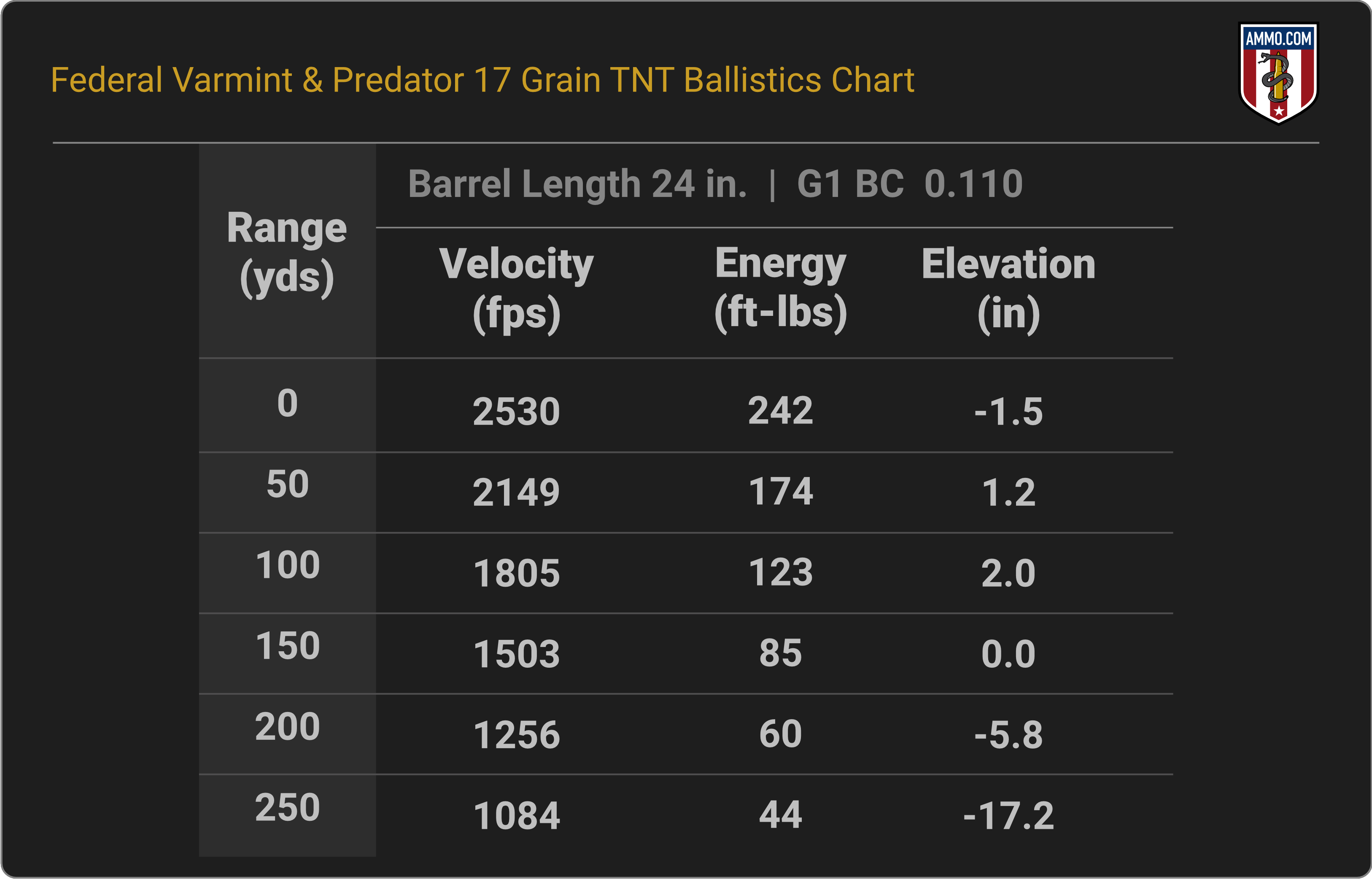
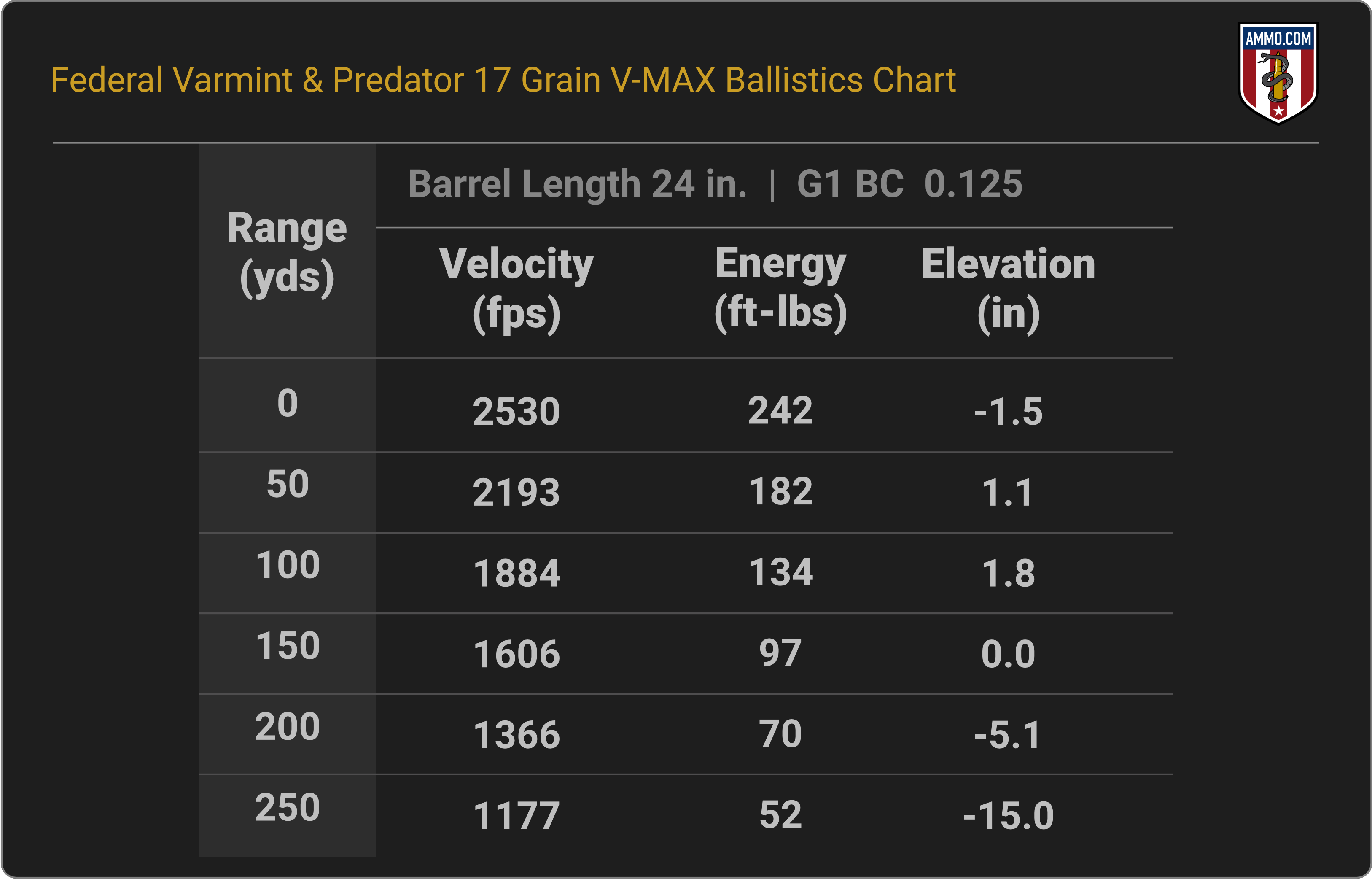
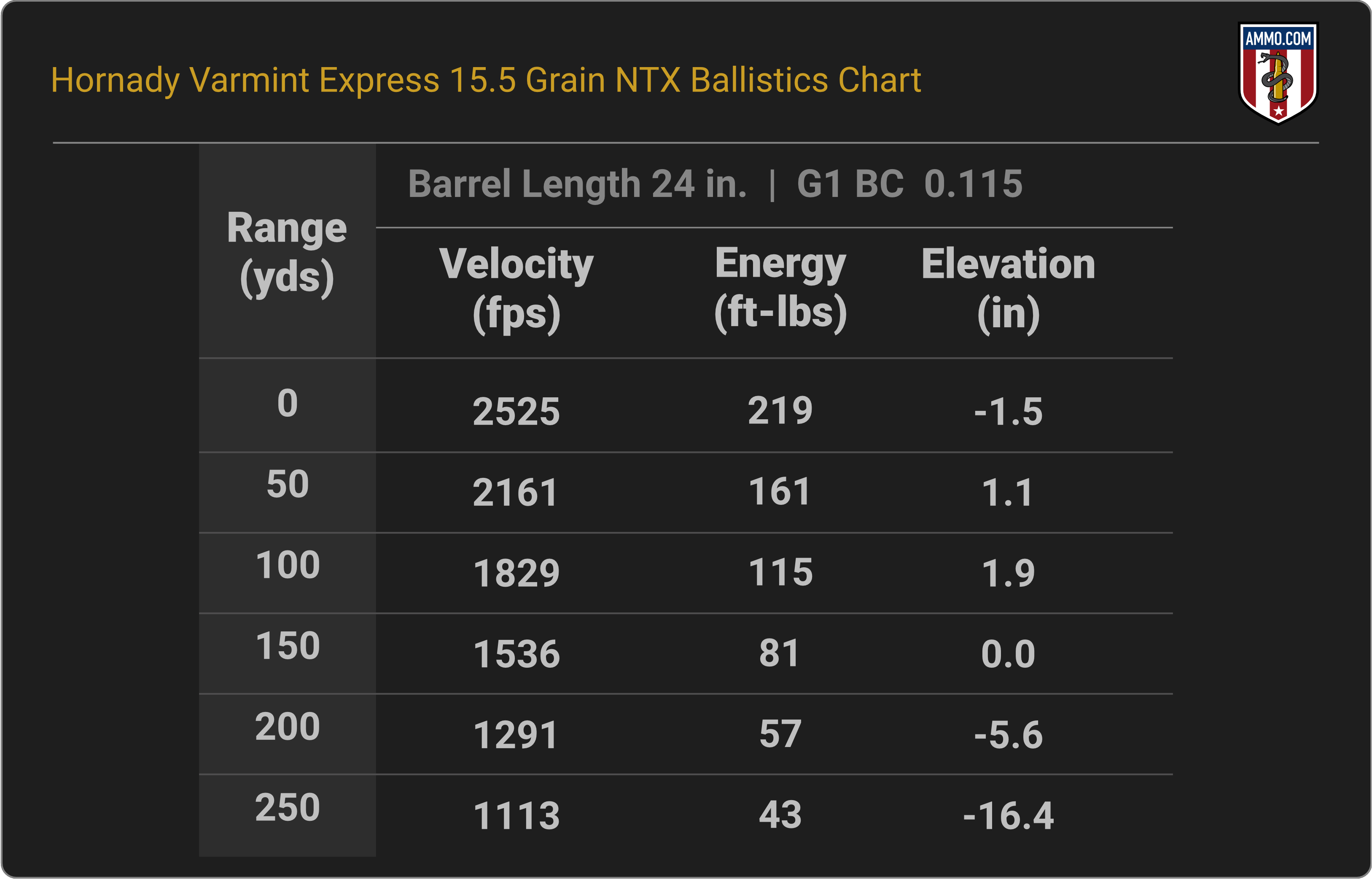
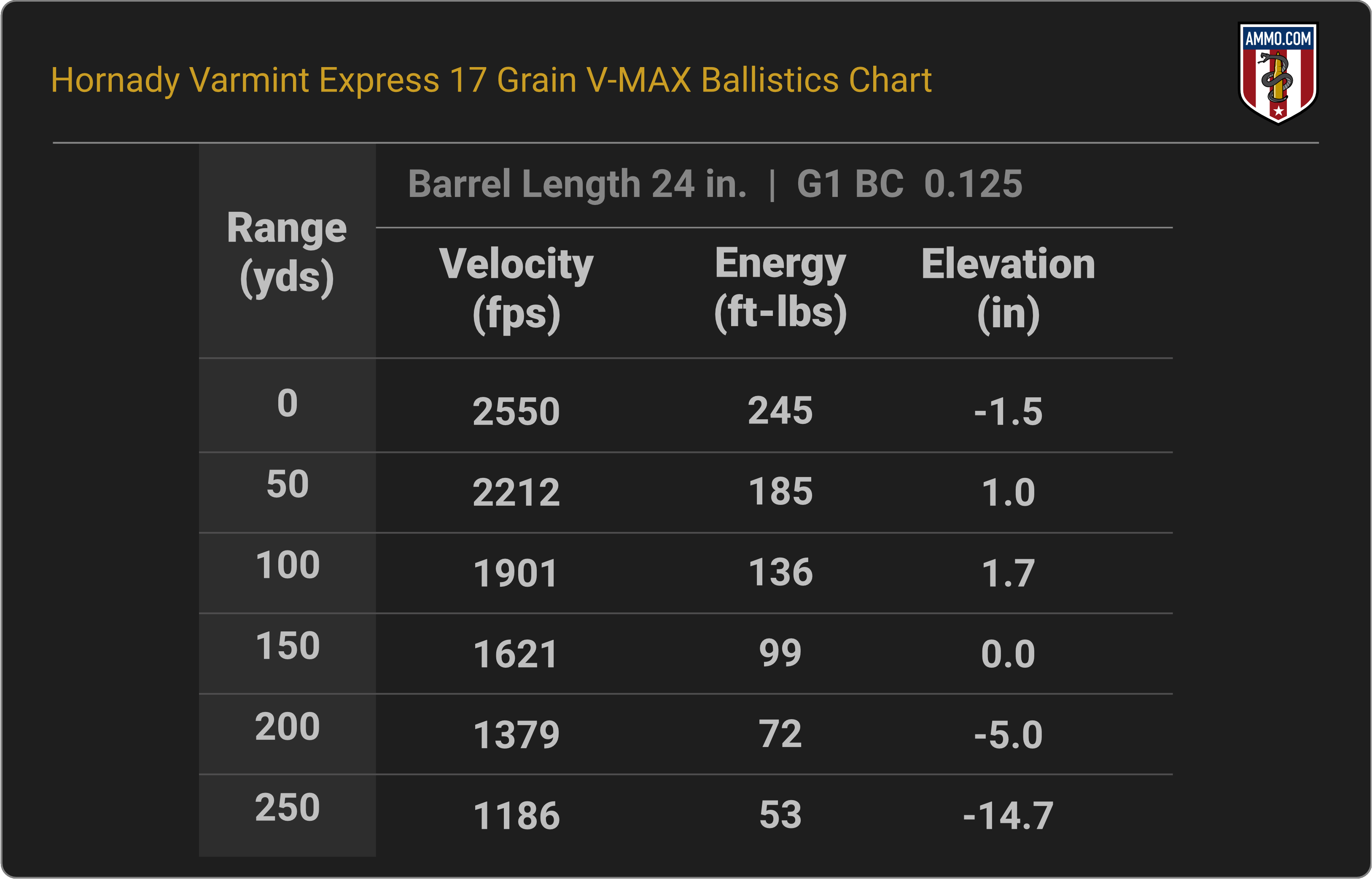
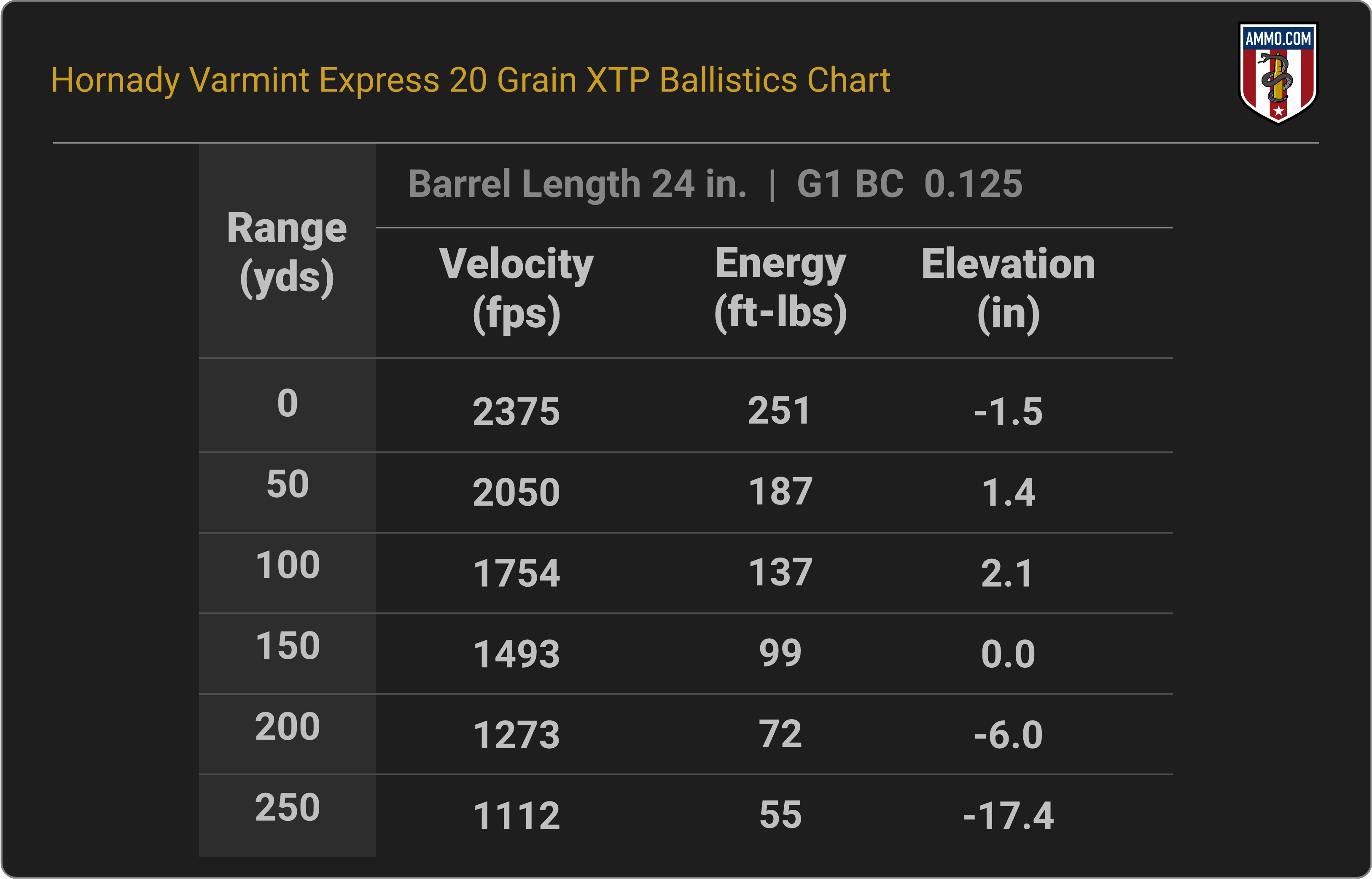
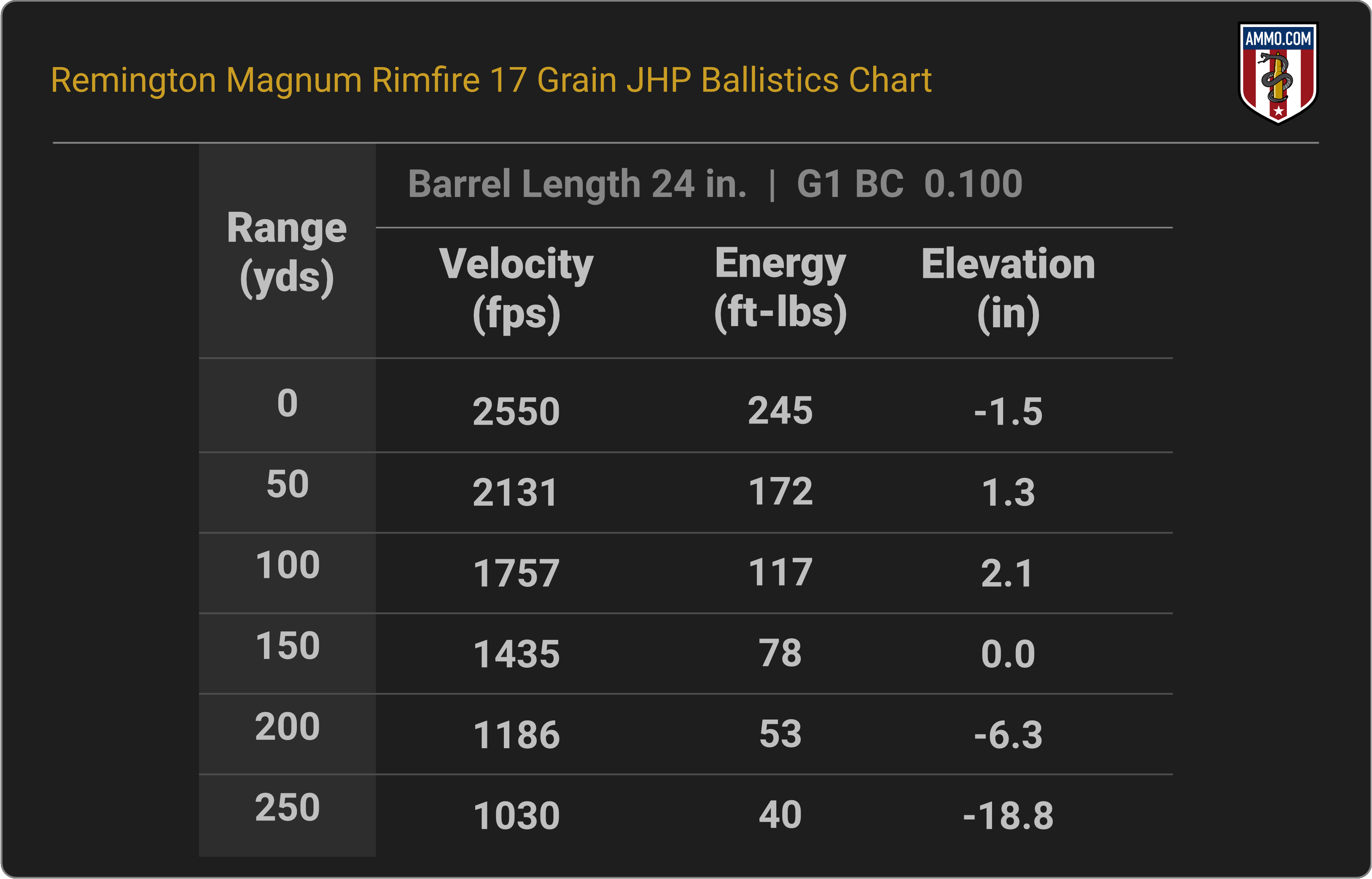
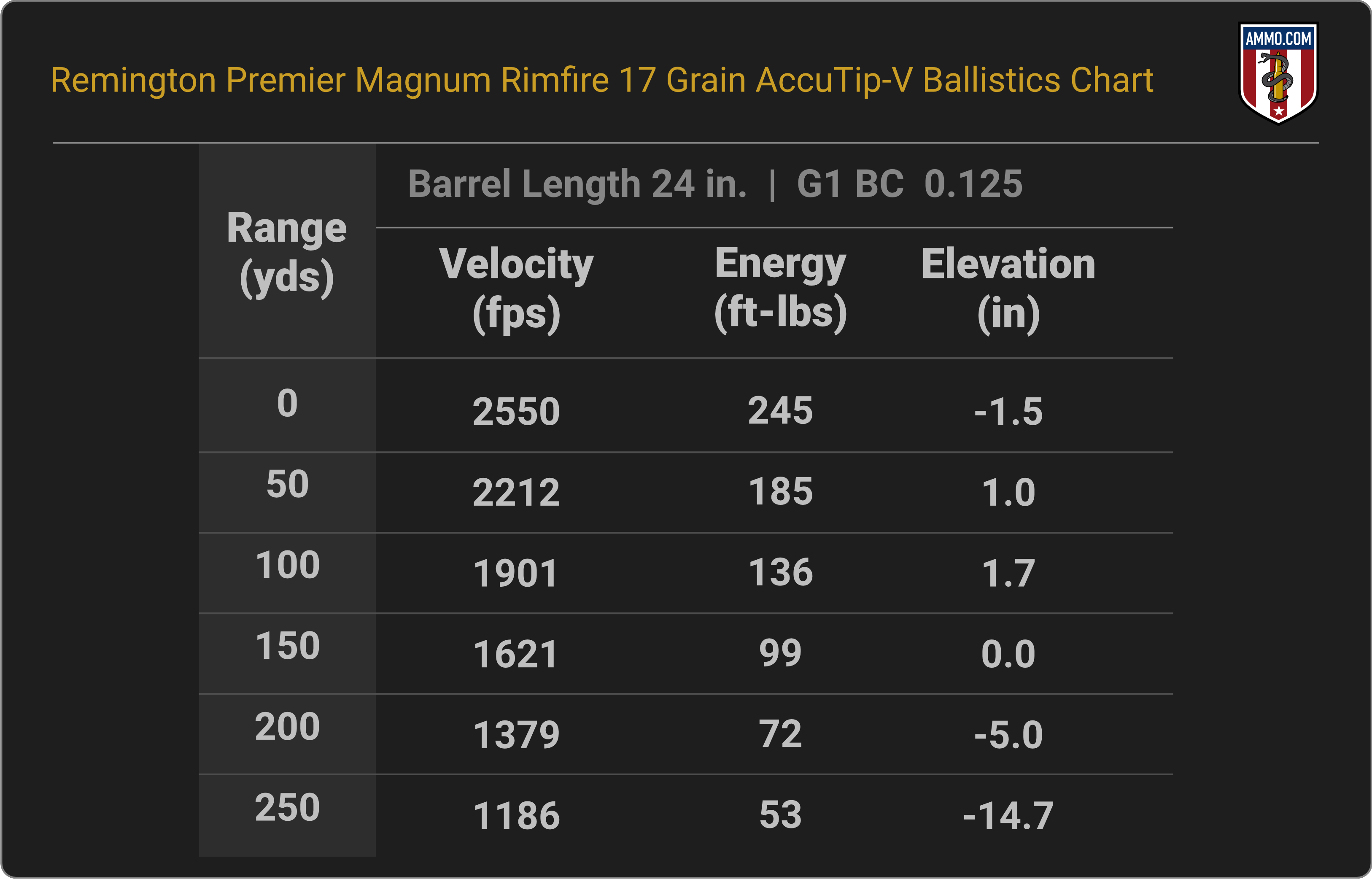
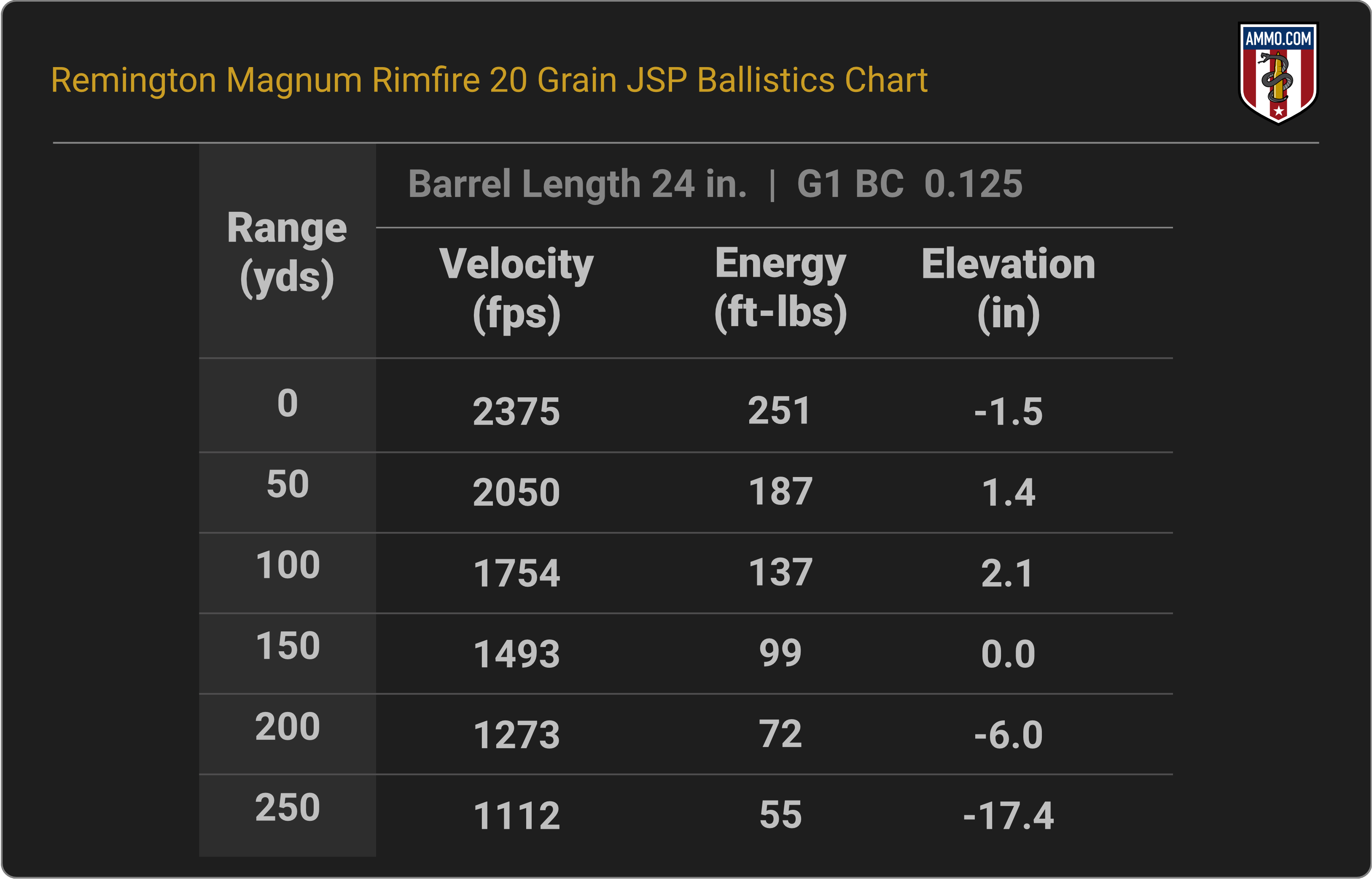
But back to the article. It has long been a standing adage in long-range shooting that if you want an accurate shot, you need a minimum of about 1400 FPS at the target. The various stats quoted here would imply that the round tested as a useful (accurate) range of 150-220 yds. This is based on both shown velocities AND bullet drop. Note how generally little bullet drow there is between 0 and, say, 200 yds. But at 250 a sudden huge drop. I believe that implies the bullet went through transition somewhere in that space and became subsonic.
This is very much akin to the .45-70, which is slower, way heavier, and generally is fired like an artillery shell to get “range” It can be deadly at range *any 500 or so grain bullet would be) but you have to shoot almost a mortar arc to hit a distant target.
Devereaux, you raise some interesting points about the .17 HMR and its ballistics. Your experience with the Kimber 1911 is compelling, especially regarding how it handles skips compared to a .22 Long.
The idea that you need around 1400 FPS at the target for accuracy makes sense, and the data presented does suggest that the .17 HMR maintains a useful range of 150-220 yards with minimal drop until around 250 yards.
It seems plausible that at 250 yards, the bullet might transition to subsonic speeds, which would explain the sudden drop in trajectory. Your comparison to the .45-70 is an intriguing analogy, highlighting how heavier rounds require a different approach to long-range shooting.
Do you have any specific loads or manufacturers in mind for your potential barrel project?
No. Just commercial loads. I have found that the currently chambered .17 HM2 and I would like to be able ot swap barrels for the .17 HMR as it is more powerful - and cheaper and easier to obtain. It seems the older .17 HM2 is too close to .22 LR standards to make people use it much, so it’s scarce and pricey.
Swapping barrels for the .17 HMR sounds like a solid plan, especially given its advantages in availability and cost over the .17 HM2. The .17 HMR definitely packs more power and has a greater range, which can be beneficial depending on your shooting needs.
It’s interesting how the .17 HM2 seems to have lost traction due to its similarities to the .22 LR. Have you looked into specific manufacturers for your .17 HMR loads, or are you considering reloading to fine-tune your options further?
I DO reload, but not rimfire. Too big a hassle to get it right, so I buy commercial. Plus I have a plethora of .22 Pistol Target ammo from back in my days shooting on a Marine Corps shooting team. .45 Target too.
It’s great to hear you’re into reloading, even if you steer clear of rimfire! Buying commercial ammo does save a lot of hassle, especially with rimfire precision.
Having a stockpile of .22 and .45 Target ammo from your Marine Corps days sounds like a solid foundation for your shooting needs. Do you have a favorite brand or load for your .17 HMR, or are you still exploring options?
Never really got to the exploration stage of that Kimber. I once-upon-a-time did prairie dog hunting with a friend (I think he tolerated me mostly because I could actually shoot back then) and brought the Kimber along for plinking when it was boring. Shot .20 Tactical hand-rolled for the dogs. Best kill - 820 yds, but it was obvious that that little 33 gr bullet had gone transition somewhere just north of 800 yds. Took me 15 shots to hit the little bugger. But out to 800 - never more than 2 shots to kill them.
Sounds like you had quite the experience with that Kimber and the prairie dogs! Shooting .20 Tactical hand-rolled loads must have been a thrill, especially with the challenge of hitting those targets at such long distances.
The transition you mentioned at 800 yards is a common issue with lighter bullets — they can lose stability beyond a certain range. With your history of shooting and reloading, have you considered experimenting with different bullet weights or types in your .17 HMR for precision at varying distances?
It might be interesting to see how they perform compared to your past experiences.
As I said, I’ve really not experimented much beyond plinking and an occasional range day with the .17 HM’s.
My .20 Tactical I have fooled around a good bit with both bullet weight and powder loads. In the end I found no benefit to heavier bullets. About the best you could get would be 44 gr bullets, and that didn’t give any significant performance edge. I settled on the red-tipped Hornady 33 grainers in .204. The biggest difference was that I could overload this round a whole bunch. I would increase drop weight by 0.1 gr per trial. When the bolt became hard to open, I would back off 0.5gr and shoot that. Velocity would be in the 4500 FPS range. SO, a fast but light bullet acts differently than a slower but heavier round. Doesn’t take much to kill a prairie dog. I once shot a dog at about 150 yds (NOT a distance I would normally bother to shoot at, but this bugger was just sitting at the side of his hole while I was sending shot after shot into a bunch of his buddies around a hole about 600 yds away). I hit him and he “disappeared” from my scope. I looked up and there he was going up a good 150’ before turning around and plummeting to the ground! Weirdest thing I’ve see.
It sounds like you’ve really dialed in your .20 Tactical loads with those Hornady 33 grainers! That level of experimentation with bullet weight and powder is impressive.
Your observation about the fast but light bullet dynamics is spot on. It’s fascinating how a lighter bullet can perform differently at range compared to heavier options.
That prairie dog story is wild! It’s always a thrill when you see the impact of your shot in such an unexpected way.
Have you thought about how similar principles might apply to the .17 HMR? It could be interesting to see how different loads affect performance, even if you’re primarily using it for plinking.
Could be a typo, but 4,500 fps is plausible for a .204-class load with a very light bullet if everything was really leaned on. I’d treat it as a “possible but verify” number, not something I’d trust without a chrono and published load data in front of me.
Don’t think I could find that small AND light a bullet out of titanium. Plus it would probably burn my barrel out in no time. As it is, I use a CO2 tank, pistol grip nozzle, and a spent case with the primer hole drilled and tapped to screw onto the pistol grip nozzle. About 45 seconds or so and you have a stone cod barrel. So you shoot until the barrel starts to feel warm, then cool it. With that process I think my barrel just may last forever.
The sad part is that Ruger could have had THIS cartridge for their Ruger 204. But they chose a different case, and that limits them to about 3900 FPS max.

 Don’t think I could find that small AND light a bullet out of titanium. Plus it would probably burn my barrel out in no time. As it is, I use a CO2 tank, pistol grip nozzle, and a spent case with the primer hole drilled and tapped to screw onto the pistol grip nozzle. About 45 seconds or so and you have a stone cod barrel. So you shoot until the barrel starts to feel warm, then cool it. With that process I think my barrel just may last forever.